5 Things I Loved About Xplore Naga 2017
By Johann Go
|5 min read
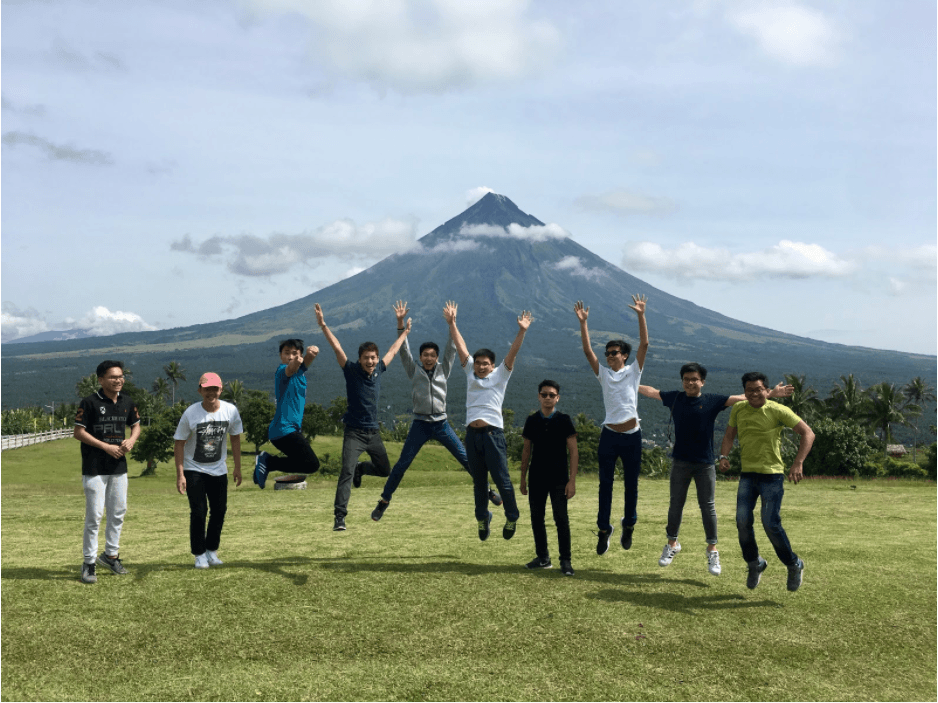
It was barely past midnight on a remarkably ordinary Thursday, and I was in a group of nine sleep-deprived Xaverians being shuttled to NAIA’s domestic terminal. I had signed up for nothing less than a tropical adventure, a six-day break from my mundane dribble of schoolwork and extracurriculars—and I wasn’t disappointed.
Unlike the school’s other Philippine and international exploration programs which happen during semestral or summer breaks, Xplore Naga is a trip scheduled on the weekend of Naga City’s annual Penafrancia festival in mid-September (which meant we skipped four days of school!). Admittedly, as we drove on our final morning past streets draped with banderitas and the city’s dramatic blue-and-green backdrop, I didn’t want to leave.
Here are five things I loved about Xplore Naga—five reasons for you to join the trip next year!
Stunning views
I whipped my phone out and pressed it against my plane window in timelapse mode as I enjoyed my first glimpse of the ever-majestic Mayon Volcano. Its surreal conical perfection, set before idyllic fishing villages and expanses of green farmland, remains among the most beautiful things I’ve seen in my life.
Mount Isarog in neighboring Camarines Sur is a pretty addition to the Bicolano landscape. We visited a deer farm at the foot of the mountain and enjoyed panoramic views of the region while petting and taking selfies with cute deer. In Bicol, the sun shines brighter, the air is fresher, and the people smile more.
As we toured the sleepy streets of Legazpi, I told myself I would one day leave my city life behind, and probably live in a simple beach house by the sea with Mayon in my backyard.
Bicolano eats
At our first buffet lunch in Legazpi, I kept going back for seconds: I kept filling my plate with splotches of laing, a vegetable dish made from taro leaves; bopis, sauteed pork innards; and of course, Bicol express, a dish with friendly green chilis and pork. In the afternoon, in an attempt to rehydrate, we tried Bicol’s infamously spicy sili ice cream. Served in four levels (1, 2, 3 and “volcano”), we only dared to try level three, which was already ridiculously hot. Worst decision I’ve ever made.
I thought I had already stuffed myself with enough Bicolano food until we arrived in Naga the following day. Bigg’s Diner, which plans to soon open shop in Manila, is a new favorite: their sisig is served with—surprise—laing and raw eggs. No dish could possibly be more heavenly. Red Platter is another beloved local restaurant, known for authentic laing and their own version of bicol express. Earthquake Cafe in Robinson’s Naga has the prettiest milkshakes—we ordered the Duterte Red Velvet Shake complete with Bicolano red chilis—and the best laing pasta on the planet.
On our last night in Naga, we knew it would be our last chance to help ourselves to many Bicolano foods, so we rushed to the city market to buy pili nut products, where I bought 3kg of raw pili nut, and on to the night market to devour sticks of chicken innards and unknown, albeit delicious, meaty substances.
I’d be laing (horribly underappreciated pun intended) if I told you Bicol isn’t foodie haven.
Jeeps and trikes
Once we arrived in Naga, we were surprised to find out we would ditch our air-conditioned vans for localized jeepneys and tricycles. We would spend the next four days going around the province of Camarines Sur in open-air public utility vehicles.
We rode our jeep everywhere: to church number one, church number two, church number three, the mangrove planting village, this site, that site, around the city, hours up the mountains. This was one of my fondest highlights of the trip. While heading toward the hot springs or the deer farm hours away from Naga, we began to play a wide array of icebreaker games—black magic, human math, and the like. We turned our jeep rides into karaoke sessions with our childhood favorites from High School Musical and that LSS-inducing song from Sigrid Andrea Bernardo’s Kita Kita.
There was one time when we were in a rush to return from Robinson’s Naga, so eight of us squeezed into one tricycle—two behind the driver, one on their laps (that’s me), four in the sardine can carriage, and one making sabit on the side.
Chasing virgins
I’m not one bit religious, but a euphoric feeling rushed through me from where we watched the street procession of Ina, Naga’s treasured figure of the Virgin Mary, Our Lady of Peñafrancia. We were (quite literally) moved as the figure mounted on a round float made its way through the crowd of a few million devotees.
It was in that moment I felt a sense of awe and admiration at the sheer number of people who make this yearly pilgrimage not for the fun of being in a festival, but because they believe in the powers of Ina. We witnessed a number of people climb the float only to be pushed back down by priests in black robes with long sticks. A man fainted beside us, and again we witnessed the spirit of bayanihan as pilgrims rushed him into an air-conditioned room.
The river procession was a more colorful spectacle. Long boats led the way as the main barge carrying Ina followed, prompting the crowd donning white headbands that read Viva La Virgen (we were too!) to begin chanting “Viva! Viva! Viva!”
New friends
Previous batches of Xplore Naga had 20 to 30 participants, but this year we were the Naga Nine—only nine of us had signed up for the program. It was better this way: I’m glad I was able to get to know these eight batchmates better through our Bigg’s Diner escapades and frivolous jeep rides.
On Sunday morning, we also had breakfast with the Jesuits at Ateneo de Naga University. It was inspiring listening to the stories of priests who had spent decades in East Timor or in Mindanao, or wherever they were missioned to live among the locals.
And of course, we also met new friends our age. Our peers from St. Agnes Academy in Legazpi welcomed us warmly, toured us around their school, and stuffed us with local delicacies. We visited the Naga City Jail with more new friends from the Ateneo de Naga high school, and planted mangrove seedlings with them on the northern Bicolano coast.
I’m not likely to run out of stories to tell. My friends who joined Xplore Naga two or three years ago tell me they still miss the entire experience. It’s an experience like no other, and one that I’d strongly recommend.