Bill Gates: His Early Life, Microsoft, and His Philanthropy Later On
By Tyler Lim
|6 min read
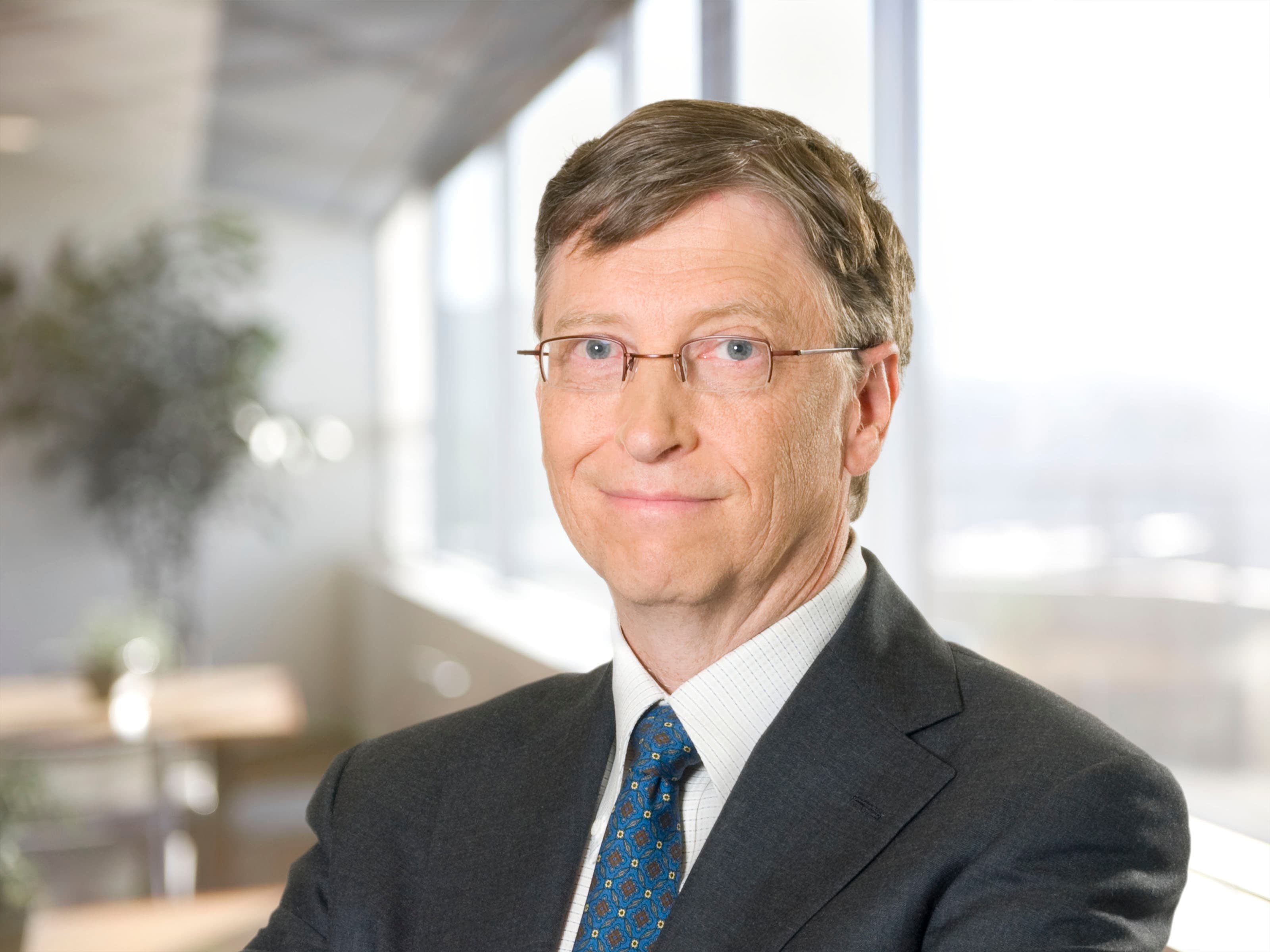
Bill Gates. A man who needs no introduction, as he is responsible for transforming the way we live through arguably the biggest breakthrough in modern history: the invention of the Personal Computer, otherwise known as the PC. Although the PC has been overshadowed by the success of more portable forms of itself such as the mobile phone, this device still continues to fulfill its purpose to many businesses and individuals around the world. For this, we can all thank Microsoft, Bill Gates’ most famous company, for creating the first modern personal computers and revolutionizing the way we live. In this article, let us delve deeper in to the backstory of this amazing individual, who, along with other visionaries of his time, started a company to help make the PC a global phenomenon, and how he became one of the greatest philanthropists of our time, supporting many noble causes with the fortune he earned. This is the story of Bill Gates.
Bill Gates was not his real name. He was born William Henry Gates III on October 28, 1955, to upper middle-class parents in Seattle, Washington. Bill and his siblings were often encouraged to be competitive and always strive for excellence. Bill did show signs of competitiveness early in his life, which paved the way for his success later on. He would coordinate family athletic events in their summer house in Puget Sound, Washington, and he was excellent in playing board games such as ‘Risk’ and ‘Monopoly’. He loved to read, to the point where he scoured through entire encyclopedias at the age of 11. He was enrolled in Lakeside School when he was 13, and this was when Gates first worked on a computer.
His school decided to let the students have some computer time, therefore they collected money from a garage sale they had to buy a new teletype machine. He also met Paul Allen, who became Gates’ best friend and future business partner. Allen was also interested in computers, which meant he and Gates would often work on programs for the computers. But then, when Gates moved to study at Harvard University, Allen decided to study at Washington State University, drop out, and move to Boston, where he would keep in touch with Gates regularly. About 2 years later, Allen showed Gates a copy of the Popular Electronics Magazine showing the ‘Altair 8800,’ a small box with a bunch of buttons on the front that served as a kit for computer hobbyists and was one of the first microcomputers in the world, which caught the attention of Gates. He then contacted the company responsible for the Altair and said that he was making the software to run the computer, despite the lack of an Altair to test it on. The president of the company decided to give them a shot. Both Gates and Allen rushed to write the software, which ran perfectly when tested on the Altair. This inspired Allen and Gates to move to Albuquerque, New Mexico, and found ‘Microsoft.’
Initially, the company did not gain traction with its software for the Altair since they had to pay a hefty royalty to the company, which is MITS or Micro Instrumentation and Telemetry Systems. Second, according to Gates, only ten percent of people using their software actually paid for it. Third, computer hobbyists were getting and redistributing the software for free to others, which meant most could get the software on their hands for free. But if you thought the situation cannot get any worse,you’d be wrong. The president of MITS, Ed Roberts, had decided to sell the company to another person, which meant they were all alone. They ended up suing the new President of MITS to secure their software for the Altair. After that, he moved the company to Bellevue, Washington, near Seattle. There, a golden opportunity struck.
IBM, or International Business Machines, another tech giant of the time, wanted to create the IBM PC, which, along with the Apple II, was one of the first of its kind. IBM asked Gates to develop software for the IBM PC, but in order to secure the deal, he had no time to create the software. Instead, he bought a ‘Q-DOS’, or a ‘Quick and Dirty Operating System’, from another Seattle software developer and sold the system for $50,000, allowing other companies to buy it if they decided to clone the IBM PC. The ‘Q-DOS’ was later changed to ‘MS-DOS’ or ‘Microsoft Disk Operating System’. Soon, after the MS-DOS was developed, Microsoft’s growth exploded, earning as eight times as much as before the ‘MS-DOS’.
After a few years, Microsoft had discovered a new kind of technology. After talks with Apple and Steve Jobs to incorporate Microsoft’s software into Apple’s PCs, what resulted was not a partnership, but, rather, a rivalry. Jobs had discovered a new kind of interface, known today as a ‘GUI,’ or ‘Graphical User Interface,’ which runs in every modern computer. Gates saw this as a threat to the MS-DOS, which was beginning to lag far behind the GUI software that Jobs developed, called the ‘VisiCorp’. To counter this, Gates used the “partnership” to his advantage and developed Windows, which also used the GUI and was compatible with the software that ran the MS-DOS, which meant that many people were unwilling to change to VisiCorp, which lost popularity soon after. After Gates launched Windows, Apple threatened to sue. Microsoft retaliated, threatening to delay all shipments of Macintosh-compatible software. Apple could not afford for the software to be delayed, so they had to back down. In the early 90s, however, Microsoft, especially Gates, got into hot water.
In the early 90s, Microsoft and Gates were getting a bad reputation. Despite Microsoft’s successes and him being the youngest billionaire at the time at age 31, he developed an even more competitive spirit, which meant that he would do whatever it takes to always be ahead of his competition. Gates’ ruthlessness was countered by IBM and other computer manufacturers, who, together, teamed up to take on Microsoft with the ‘OS/2’, which eventually waned in popularity due to the continuous domination of Windows and a new product called Microsoft Office which was compatible with all Microsoft products. The Federal Government caught up to Gates, however. They accused him of going into unfair deals with other computer manufacturers. The company risked a corporate breakup of the Software development division and the Operating Systems division. Gates, in an insane tactic to save his reputation, invested millions into Apple using non-voting stock, who at the time was on the verge of declaring bankruptcy, helping both Apple and Microsoft.
In 2000, he finally stepped down from Microsoft’s day-to-day operations and handed his role to Steve Ballmer, who was eventually replaced by Satya Nadella, the current head of Microsoft. Gates, despite his competitive and ruthless spirit, decided to venture into philanthropy . He did this through the Bill and Melinda Gates foundation, which pours in billions of dollars to tackle the world’s most pressing issues. Some of the foundation’s most notable projects are for disease research and eradication such as for polio and AIDS, sanitation and hygiene improvements for developing nations, and financial assistance for promising scholars and struggling families alike. Lastly, he, along with famous billionaire Warren Buffett, started the Giving Pledge, which encourages billionaires to donate a large sum of their wealth away.
In conclusion, Bill Gates is rich and famous due to him being accredited for paving the way for modern technological development. He is a very smart and competitive businessman, grasping opportunities early and fiercely competing with his rivals, helping to improve the PC every step of the way. He is not only a great businessman, but a great philanthropist , too. He practices humility in assisting those who are most in need by incorporating modern technology into improving the healthcare and welfare systems in developing nations. He left a lasting impact when he stepped down from Microsoft, but his innovations, such as the Windows and the MS-DOS, will forever be ingrained in people’s minds whenever they think of Microsoft.


