Coronavirus: Where Are We With A Cure?
By Joaquin Gabriel Malachi Antonio de Castro
|5 min read
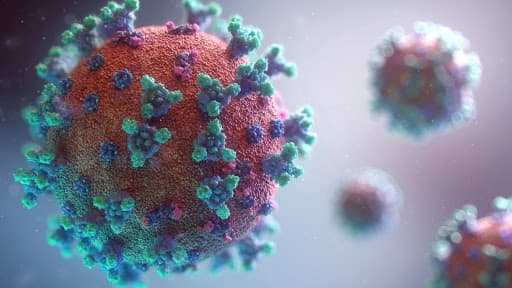
Fear may have driven individuals into the safety of their home, but hope and solidarity have united public and private institutions in the pursuit of a cure and vaccine for the Novel Coronavirus (COVID-19). Such efforts are being led by government officials and health workers alike; all under the banner of ending the pandemic once and for all. Currently, healthcare workers are focused on treating the respiratory problems associated with the virus such as pneumonia through supportive care. There is also a push for drug repurposing by pharmaceuticals as they scavenge for antivirals previously designed to treat Malaria, HIV, or other similar viruses that could possibly be effective against the novel coronavirus. Although none were shown to be completely effective, several have shown promise, with the World Health Organization’s assistant director-general, Bruce Aylward, giving a nod to the drug, ‘Remdesivir.’ It is believed that the drug may have a real chance of curing infected patients, given the relative success of a number of trials. Several candidate vaccines are also being developed by private organizations with government funding and support. A promising vaccine is currently undergoing human trials as well, with health officials placing estimates at 18 months before a vaccine can be distributed to the public. The following article chronicles present attempts at a cure and vaccine for this global pandemic.
What we are working with
Current treatments are what the Centers for Disease Control and Prevention (CDC) calls “supportive care.” These measures treat the symptoms of the virus, similar to what cough droplets do for the common cold. Symptoms associated with SARS-COV-2, the viral infection itself, such as a high fever, can be treated with ‘acetaminophen,’ commonly known as Paracetamol (Pappas, 2020). Other symptoms, according to the National Institute of Health, include cough and shortness of breath. Oxygen ventilation and numerous ‘glucocorticoids’ are administered to patients with respiratory complications associated with pneumonia (Hu et al., 2020). These were used to decongest air passages and suppress inflammation. There have also been several attempts to treat COVID-19 with steroids such as corticosteroids. However, studies have shown that such drugs had no significant impact on COVID patients (Russell, C., Millar, J., & Baillie, J., 2020).
Antiviral drugs
In a recent biotechnology article published on Nature, Charlotte Harrison points out that there has been a strong push for drug repurposing by both governments and pharmaceuticals (Harrison, 2020). Antiviral drugs designed to treat other illnesses found a role as a possible treatment for COVID-19. Four patients ages 30 to 36 recovered from the virus upon being given ‘oseltamivir’—a drug designed to be used against the influenza virus (Lan et al, 2020). The WHO also reported that ‘remdesivir,’ initially developed by Gilead Sciences to treat Ebola, has shown promise in a few tests and is currently under trial (Holshue et al., 2020; Wang et al., 2020). David Paterson, a professor at the University of Queensland, says the drugs Chloroquine and a combination of ‘lopinavir/ritonavir,’ also known as Kaletra, “could actually cure the virus.” Choloroquine and lopinavir/ritonavir were initially meant to combat malaria and HIV respectively (The University of Queensland, 2020). Chloroquine has proven effective in several trials (Raoult et al., 2020; Wang, 2020). However, the CDC warns against using these drugs outside of medical supervision, with Chloroquine showing adverse effects in a couple who accidentally ingested it. In addition, based on a study published in The New England Journal of Medicine, the drug combination ‘lopinavir/ritonavir’ was “not associated with a difference from standard care in the time to clinical improvement” (Cao, 2020). Nonetheless, the WHO just recently launched SOLIDARITY: a “large global trial” of four promising therapies including these same drugs, with the addition of hydroxychloroquine and another variation of the ‘loponavir/ritonavir’ combination (Cohen & Kupferschmidt, 2020). Despite these results, it goes without saying that test results don’t always completely agree. Additionally, health institutions also strictly discourage people from hoarding these drugs, as patients with conditions such as Lupus are in need of them. It is clear that a cure is yet to be found, and several of these drugs may still have to be modified in the future to better treat the virus.
A new vaccine: aberrant or groundbreaking?
Biotechnology company Moderna, in synergy with the National Institute of Allergies and Diseases, is developing a rather unconventional type of vaccine. The mRNA-1273 does not contain an active form of the virus. According to the United State’s National Institute of Health, instead of introducing the virus directly into the body, the messenger RNA present in the vaccine prompts existing cells “to express a virus protein” that should “elicit a robust immune response.” Since the vaccine does not require a sample of the virus, the mRNA-1273 vaccine can be manufactured much more quickly than traditional vaccines. Such was made possible through previous mRNA vaccines that Moderna had pioneered, though none of which are currently on the market. So instead of creating an entirely new vaccine, Moderna officials explain, the vaccine “software” is simply replaced by the genetic sequence of the novel Coronavirus.
To understand how the vaccine works, it is essential to see how exactly the virus infects a host cell. Researchers from both the Department of Molecular Bioseciences of the University of Texas and the Vaccine Research Center of NIAD published a study detailing the structure of the COVID-19 virus. They have found that the spike protein (also known as the S protein) in the virus’ outer coat is what allows the virus to gain entry to the host cell. In this process, the S protein “undergoes structural rearrangement” in order to fuse the viral and host cell’s membrane (McLellan et al., 2020). This changes the protein from a state prefusion conformation (its state before fusing with the host cell) to postfusion conformation (its state after fusing with the host cell).
The key role that the S protein plays in the viral infection makes it an ideal target for antibodies. Another factor considered in synthesising the vaccine was the protein’s conformation. The NIAD scientists found that the protein was more stable in its prefusion conformation. Hence, they explain that the mRNA vaccine will make use of the spike protein in its prefusion conformation rather than the less stable postfusion conformation. Such would better preserve the target for antibodies and hopefully make the vaccine safer.
Hopefully…
In spite of the numerous drug testings being done all over the world, no cure has been found. Despite this, there may be reason to hope given the new vaccine being developed and the successes seen with some medical drugs. In the midst of the confusion and disarray, it is important to be cooperative as a community to the different health precautions being imposed. Compliance with these policies are the best way we can support healthcare workers, and hopefully end the pandemic. Furthermore, it is also pertinent to be informed about information surrounding the pandemic, and carefully discerning fact from fiction. Finally, both government and society should not apathetically downplay the severity of the outbreak to encourage complacency, nor should they irrationally exaggerate the issue to rouse unnecessary panic. Disinformation and apathy run rampant in society as well, and awareness, solidarity, and empathy are the only cure for that.
Related:


