Do Not Cease Education, There May Be a Way
By Jaden Lim
|4 min read
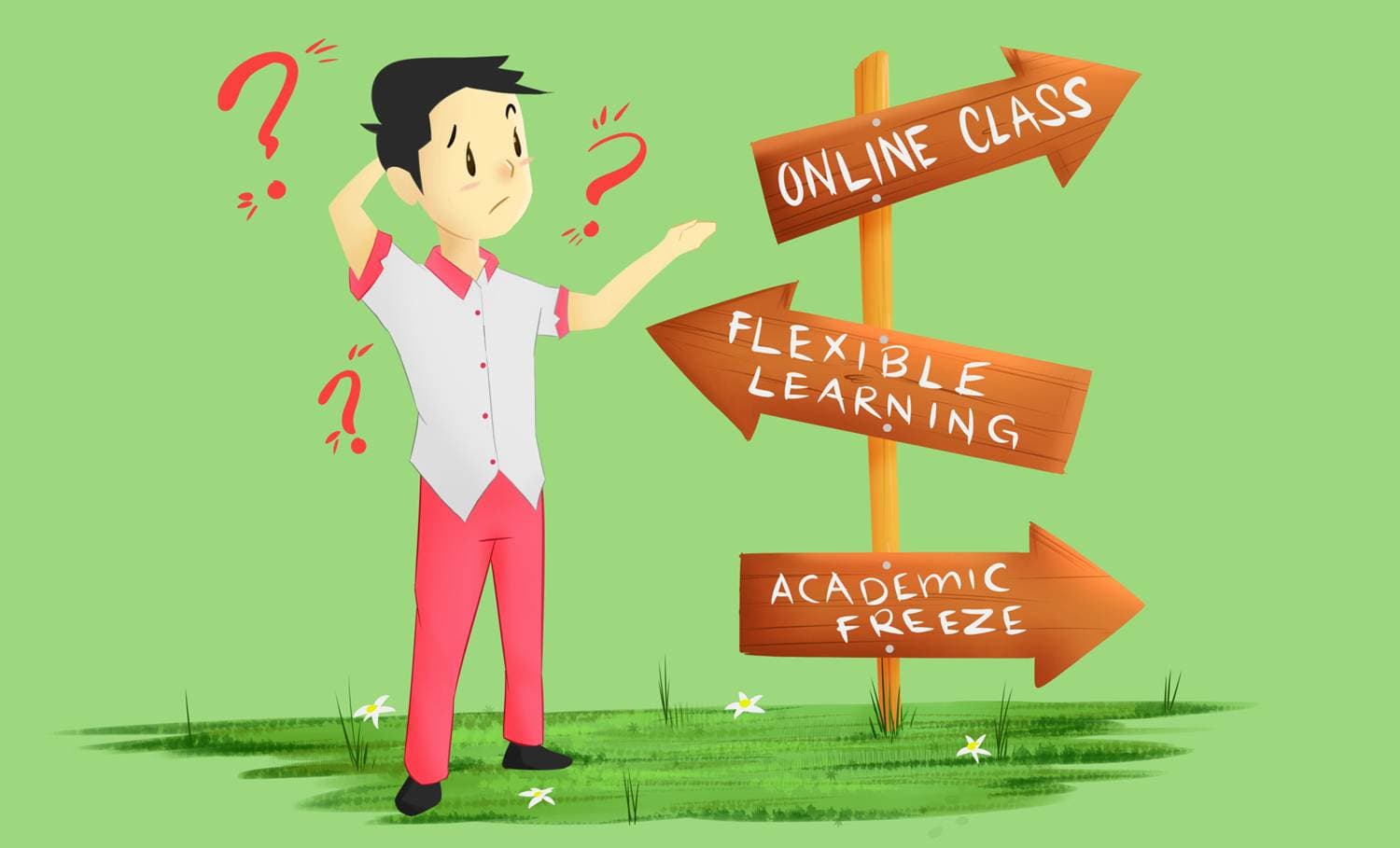
As the COVID-19 crisis persists, the Philippine government has declared the beginning of the “new normal,” a paradigm shift aiming to keep society up and running while being wary of the ongoing pandemic. With 27.2 million students unable to attend physical classes for school year 2020-2021, the Department of Education (DepEd) and the Commision on Higher Education (CHED) have put online distance learning (ODL) into practice. However, an enormous number of Filipinos have criticized this decision because a considerable amount of underprivileged students are not only struggling to find a source of income and food, but are also expected to afford mobile gadgets and an internet connection. The similar stands of many have created a unified plea for an “academic freeze,” wherein learning is deferred until physical classes are confirmed to be safe.
Recent statistics for the pandemic predict over a yearlong lockdown, so a hypothetical academic freeze will imply the reality of millions of idle students waiting for the time to pass. Doing so will pose a negative impact because the lack of stimuli will lead to mental and physiological repercussions such as cognitive decline, depression, and dementia. Some argue that students can find other means of learning amid the suspension, but that is not plausible when many do not have the necessary resources to begin with. Others argue that school will interfere with students who labor extensively to put food on the table, however a few hours of learning can tremendously freshen them up from a working mindset and improve their mental capabilities. As such, an appropriate learning setup will not hinder struggling households, while constantly keeping the students’ minds active.
Going against the academic freeze is not meant to romanticize the genuine hardships of students and teachers in attending class, but it is to push for an innovative ODL that can cater towards the needs of the poor so that they are not left behind in their education. There are certainly millions of Filipinos who are burdened by this decision, but there are also a significant number who are capable of having online classes and who desire to finish their studies in order to support their families. Therefore, in line with the nation’s duty to support its citizens’ education, online distance learning is a must.
Public schools such as the Concepcion National High School of Basilan, Mindanao provide a new train of ideas with their “effective, cost-efficient, and crisis-resilient” Central Visayan Institute Foundation-Dynamic Learning Program (CVIF-DLP) that hones students’ self-study skills with minimal intervention from teachers (RC, 2020). The school adopted it in 2012 as a countermeasure against the natural and man-made calamities occurring in the region. Despite limited guidance from the teacher, CNHS principal Alawi Mojawid says they noted significant improvements in student academic performance as their mean percentage score in the National Achievement Test (NAT) increased after they adapted to the system.
The learning program’s Facebook page has posted videos about three scenarios for its implementation: access to device and stable internet, access to device and limited internet (i.e. mobile data), and no access to either. Schools that fit in the first two are prompted to communicate through Messenger or Gmail; teachers and students will digitally send weekly modules and answers respectively (those with mobile data will type their answers instead of sending a picture). Schools who fit in the third scenario will be delivered modules that are to be picked up and returned every week. This solution is promising as it does not add cost to those lacking digital resources, however weekly visits are tedious and increase the risk of catching the virus.
The impact of the ODL may be enlarged through collaborations between local government units (LGUs) and gadget companies in distributing inexpensive but quality tablets with a complete bundle of pre-installed modules and answer keys to households. All learning materials are delivered only once, thus resolving the issues brought by the weekly physical delivery of modules. Users may pay for the gadgets post-pandemic to allow those struggling financially to get by. Although DLP modules have been developed over the years, they must be meticulously inspected and modified by DepEd to provide an incredibly comprehensive guide of the lesson, which will minimize the chances of clarifications by the students. This rough idea will encounter problems such as the availability of devices, method of delivery, module creation for college students, and much more, however throwing the idea out there may breed a legitimate plan of action.
Despite the subpar COVID-19 management rendering citizens in poor condition, that is not to say that a flexible education should be dismissed. The criticisms towards DepEd’s verdict expressed the needs of the people such as costly internet fees, insufficient learning materials, and more; this key feedback can be utilized to construct a new and improved ODL. Although a crude suggestion was presented, introducing something plausible may make successful mid-pandemic education a reality. Regardless of what type of ODL becomes policy, it must not be the first and foremost priority of LGUs; the severe living conditions experienced by many must be stabilized beforehand. There is bound to be a long time period between the mitigation of the crisis’ effects and the resumption of physical classes; that is where a safe stay-at-home learning environment should thrive. Yes, classes must be postponed until the Philippine COVID-19 situation becomes more manageable on behalf of those struggling to live, but education is not a lost cause.