Hamilton and SIX: Reclaiming Narratives Lost to Time
By Kyle Chua-Unsu and Gabriel Camiña (12B)
|6 min read
By: Kyle Chua-Unsu and Gabriel Camiña (12B)
The portrayal of time in narratives offers modern audiences a unique perspective on history. Musicals offer a creative medium for enthusiasts to draw upon the lessons of the past and communicate these lessons with modern audiences. Through the theater, artists transcend a mere retelling of the past. Rather, they employ this medium for figures lost to history to reclaim their stories.
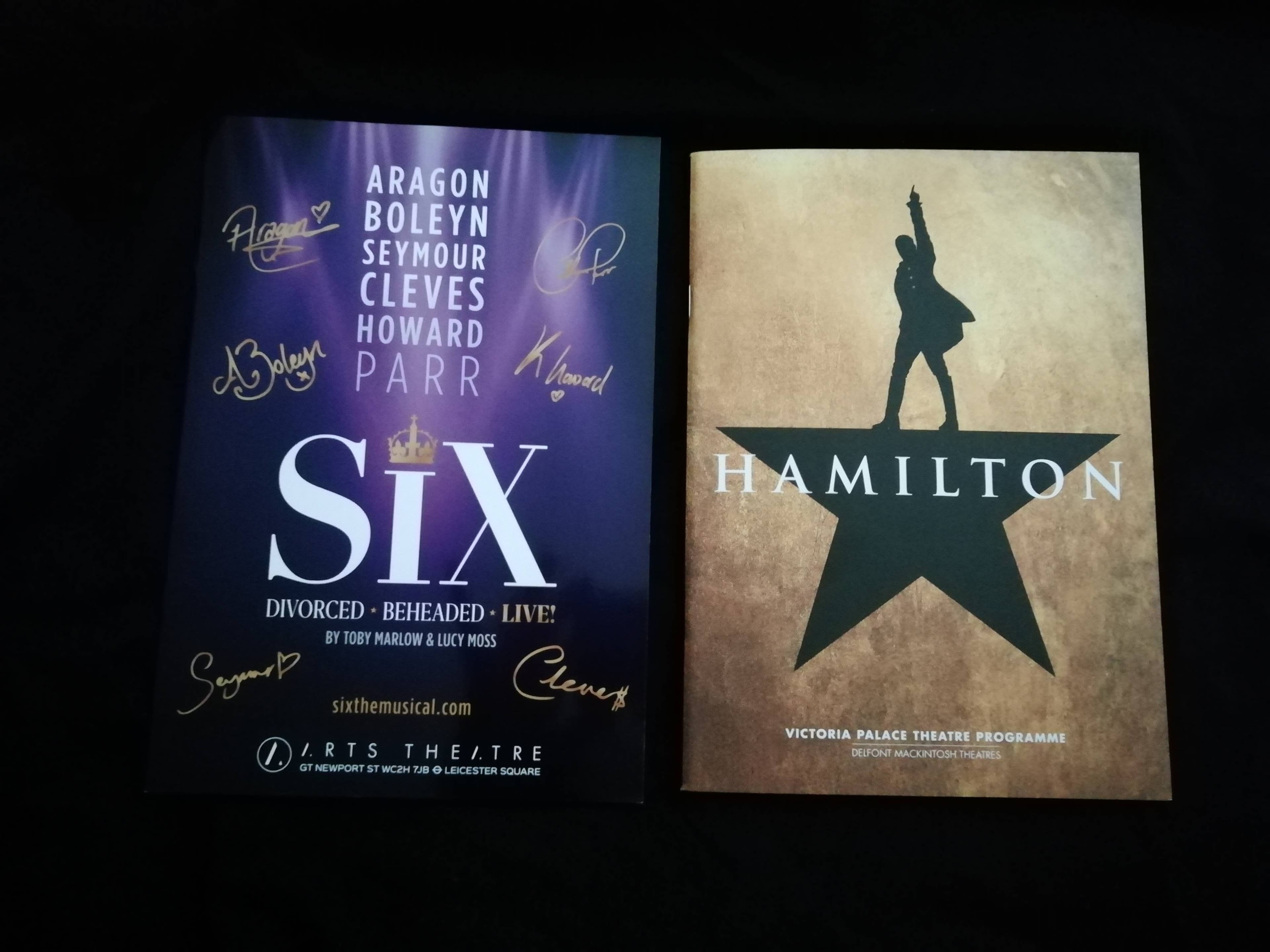
Lin Manuel Miranda’s 2016 musical Hamilton, centering around America’s former Secretary of the Treasury Alexander Hamilton, is a testament to the transformative power of musicals in reopening conversations to discuss historical figures who may have been lost to time. Similarly, Toby Marlow and Lucy Moss’s 2019 musical Six highlights the six wives of King Henry VII, exploring an alternate perspective on the history that is often taught in textbooks. Despite these musicals portraying the past with artistic liberties to a certain extent, they are nevertheless successful in connecting with viewers – reviving history lost to time.
Time.
Time is a central focus in Hamilton. In the musical’s final song Who Lives, Who Dies, Who Tells Your Story, Miranda underscores how ultimately, an individual’s legacy is determined by the passage of time, just as how Hamilton’s role as the innovator behind America’s financial system was lost to time. In recognition of how time eroded the narrative of Hamilton’s story, the musical redeems his story, as well as the other Founding Fathers, by conveying America’s past in a skillfully written manner. With Hamilton’s reflection about how legacy is what an individual leaves behind in “a garden of seeds you’ll never get to see,” Miranda further emphasizes the motif of time.
Hamilton’s foil character, Aaron Burr, notably contrasts with Hamilton’s impulsive nature in his signature song Wait For It. Miranda effectively juxtaposes both Hamilton and Burr to unveil how their individual actions have affected how history perceives them. While Hamilton is typically in the shadow of other prominent Founding Fathers such as Washington, Jefferson, and Madison, Burr is villainized as he is remembered for killing Hamilton in a duel. Despite the complex motivations and actions of these characters, the passage of time results in only certain facets of these individuals’ lives being remembered. However, with Miranda bringing this story back into the spotlight, the audience is able to re-examine the nuances in history.
Eliza.
Despite the musical being entitled Hamilton, the one who defines his legacy the most is his wife, Eliza. Referring back to the final song Who Lives, Who Dies, Who Tells Your Story, Eliza chooses to put herself “back in the narrative,” both literally in the musical and in history. By preserving Hamilton’s legacy and his multitude of achievements, Eliza ultimately has the power to shape the narrative. Together with her sister Angelica, who is also highlighted as a key figure in Hamilton’s life and the musical itself, Eliza conducted interviews, went through Hamilton’s writings, and reconstructed a narrative to tell Hamilton’s story. Perhaps, without Eliza, Hamilton’s story would have been lost to time completely, and Miranda would not have written this musical.
Moreover, the narrative constantly interweaves tracks such as The Schuyler Sisters, That Would Be Enough, and Burn to portray the perspective of the female figures who had a significant influence on the narrative, particularly Hamilton. As opposed to the historical narrative of the status quo before the musical’s release which only emphasizes the prominent males in American history, Miranda’s musical not only acknowledges but spotlights characters such as Eliza to underscore how significant women are in influencing other historical figures and shaping narratives about the past.
Her-story.
Meanwhile, Six more explicitly revives the history of women lost to time by focusing on King Henry VIII’s six wives. In history, the role of wives is so rarely emphasized as the center of past events, with stories conventionally revolving around the male figures with whom they were associated. More than the role that these wives played, their very identities are oftentimes buried and lost to time. With this, Marlow and Moss cleverly allude to the 1970s feminist movement in dialogue after the musical’s opening song Ex-Wives by referencing the term “her-story,” referring to history being told from a female perspective (Meluch, 2020), as they note that “his story’s about to get overthrown”. Over the course of the 80-minute musical, the former Queens of England – or rather, King Henry’s ex-wives – retell their experiences that never came to light in history.
The framing for the first 5 queens is as a competition, over which queen was “dealt the worst hand” by their one shared connection, Henry the 8th. Despite being a musical about exclusively female characters, the narrative seems to still focus on a man. However, this eventually gets deconstructed by the final queen, Catherine Parr. She outright refuses to sing, whilst the other queens tease her for being unable to “win the competition.” Reluctantly, she begins her song I Don’t Need Your Love, beginning with her story of Henry the 8th taking her away from her beloved, until slowly shifting into all of her accomplishments past just her relations to men. She was a writer of many books and poems and a strong advocate for female education, yet her role in history keeps her “fixed as one of six,” reducing her to a mere footnote in a man’s life. Her song awakens all the queens into realizing how childish this competition is, leaving them sulking that this will forever be their role in history.
Histo-remix.
However, they finally make the point that the show isn’t history, but as they’ve stated in Ex-Wives: a “histo-remix.” The queens all drop the competition and choose to sing a revised version of history: the lives that they deserve to live. The final song, aptly titled Six, goes over their happy endings. It details how they’ve spent “too many years lost in history”, as a double entendre to being stuck in “his story,” and how they all go on to find success past Henry. They become “free to take their crowning glory,” highlighting their independent royal status aside from just being wives. No matter how unrealistic, it serves as an important wake-up call to the erasure of women in history. These women have an entire life of their own, yet have been consigned to being remembered for being with one horrible man. As such, the ending serves to close this perception, finally empowering the queens to tell their own story. Ultimately, this rectifies the agency that they never had in the past, with the choice to reclaim how people remember them.
With this, Six solidifies Hamilton’s premise of the significance of women in history, with Six later stating that the queens are what made Henry VIII memorable to begin with and that without them he’d be just another forgotten king, just as Hamilton would have been forgotten without his wife. Despite their significance, history confines them into the background of the story, only ever focusing on the men. Eliza and Catherine Parr can serve as parallels, both taking strides in various fields such as education, orphanages, and politics, yet still being thought of as this man’s wife. Ultimately, these two musicals significantly feature various female figures throughout history, to prove that their stories are just as important as that of the men that regrettably overshadowed them.
Reclaiming stories lost to time.
Both Hamilton and Six clearly exemplify how many aspects of history may be lost due to the passage of time. These aspects are revived and brought back once more into the spotlight through the effective utilization of theater as a medium to connect with audiences worldwide, as the audience gets directly reminded to “tell their stories”. More than this, reviving history lost to time allows for figures lost to history to reclaim their own story, especially for the female figures who history excludes from discussion. As such, we can see that history typically paints an incomplete picture, thus highlighting the importance of these musicals as a form of voice for the historically silenced.
References
Meluch, R. (2020). Her story: Women across the world are making history theirs. The DePaulia. https://depauliaonline.com/47190/artslife/her-story-women-across-the-world-are-making-history-theirs/