New Delhi fights pollution crisis
By Anton Go
|3 min read
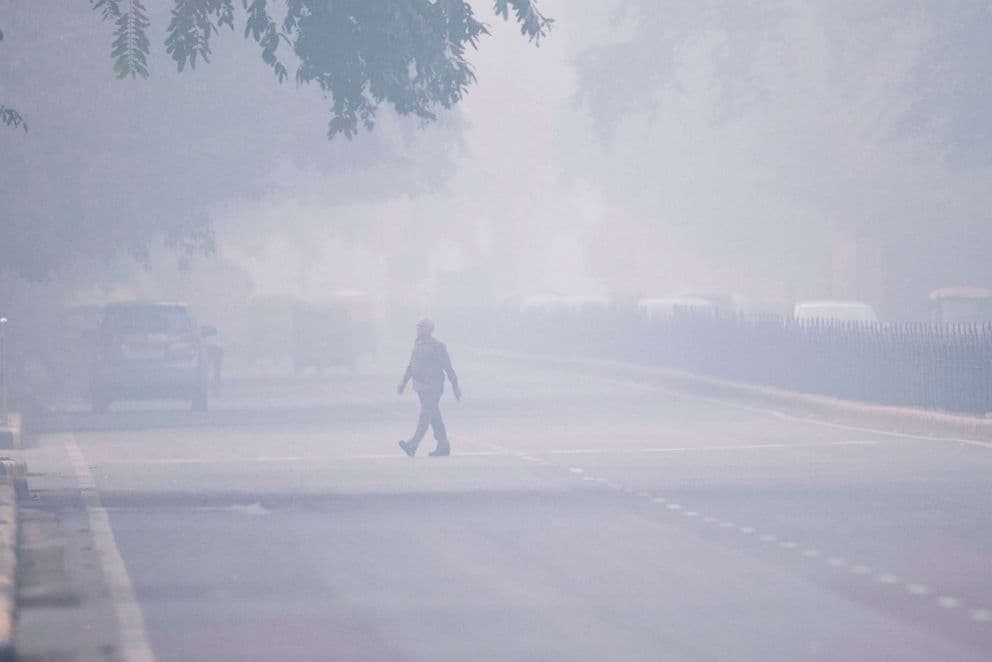
Pollution isn’t new to India. In fact, it began in 2010, when a water conservation law was implemented. However, the air quality index of New Delhi recently reached an alarming level of 568, to which the city’s Chief Minister described the city as a “gas chamber.”
Victims subjected to this kind of air quality can expect to experience major health concerns with their respiratory systems. The government is searching for various ways in order to root out the causes of this crisis.
There are many reasons why this situation has worsened over time, such as the mass volume of automobiles on Delhi’s roads, which contribute the most to air pollution. According to Irfan U. (2019), other reasons like dust from construction sites and poorer residents who are forced to burn charcoal to cook and warm themselves both add to the worsening smog. The Hindu festival of lights, called Diwali, ran for five days. On this occasion, colored powder and fireworks were set off to celebrate, serving as another factor in the dire state of pollution.
Irfan further says that one of the greater causes of Delhi’s pollution is burning crop stubble. To make space for new produce to grow, farmers typically burn the remains of grain which have been harvested. Smoke from these fires has drifted to the city, further deepening Delhi’s current pollution problem.
Although it seems that pollution in India began only in recent years, Aseem Prakash, a director of the Center for Environmental Politics at the University of Washington, states that it actually began in 2010. “I’m actually a Delhiite, and I was born and raised in Delhi, and I never experienced this pollution. The pollution has started in 2010. The question is, what happened in 2009?”
Prakash explained that located to the west of Delhi, lies the Punjab province, a region that has been providing a food surplus for the country, but farming techniques have led to a shortage of water. As a solution, the Punjab government came up with the Punjab Preservation of Subsoil Water Act. While the law proved to slow down the water shortage, it also gave farmers less than a month to free the area for new crops. Because most can’t afford to hire other workers to assist in the clearing, they turn to burning crop stubble. Not only does urban population have a hand in Delhi’s crisis, but rural areas as well.
It doesn’t help that ever since 2011, the city’s growth rate has brought the total population to 29 million.
Assistant professor Joshua Apte at the University of Texas at Austin has shared his initial remarks about the topic: “The air quality in Delhi was horrific on Sunday, but also depressingly predictable. These extreme pollution events happen across North India every November – not just in Diwali. Citizens have every right to be outraged by the policy inaction that creates these grave health risks.”
Due to the hazardous smog, schools were closed, flights were canceled, and the government had to come up with a temporary solution of distributing face masks to protect citizens from breathing harmful gasses (Chambers, 2019).
Multiple approaches have been implemented in order to reduce further degradation of the already harmful air. One such approach was the “Odd-Even” rationing scheme. Vehicles with an even registration number would be allowed to drive on even days, while those with odd numbers would drive on odd days. The effectiveness of such a strategy remains has yet to be seen. Brick kilns and factories have also been shut down. India’s Supreme Court banned the burning of crop stubble but fires continue to combust.
References:
Chambers, A. (2019, November 4). New Delhi, India, rations cars to combat deadly air pollution, Supreme Court weighs in. Retrieved from https://abcnews.go.com/International/delhi-rations-cars-combat-deadly-air-pollution-supreme/story?id=66738930
Irfan, U. (2019, November 8). The law that’s helping fuel Delhi’s deadly air pollution. Retrieved from https://www.vox.com/science-and-health/2019/11/8/20948348/delhi-india-air-pollution-quality-cause