On the Other Side of the Screen
By Coby Silayan
|4 min read
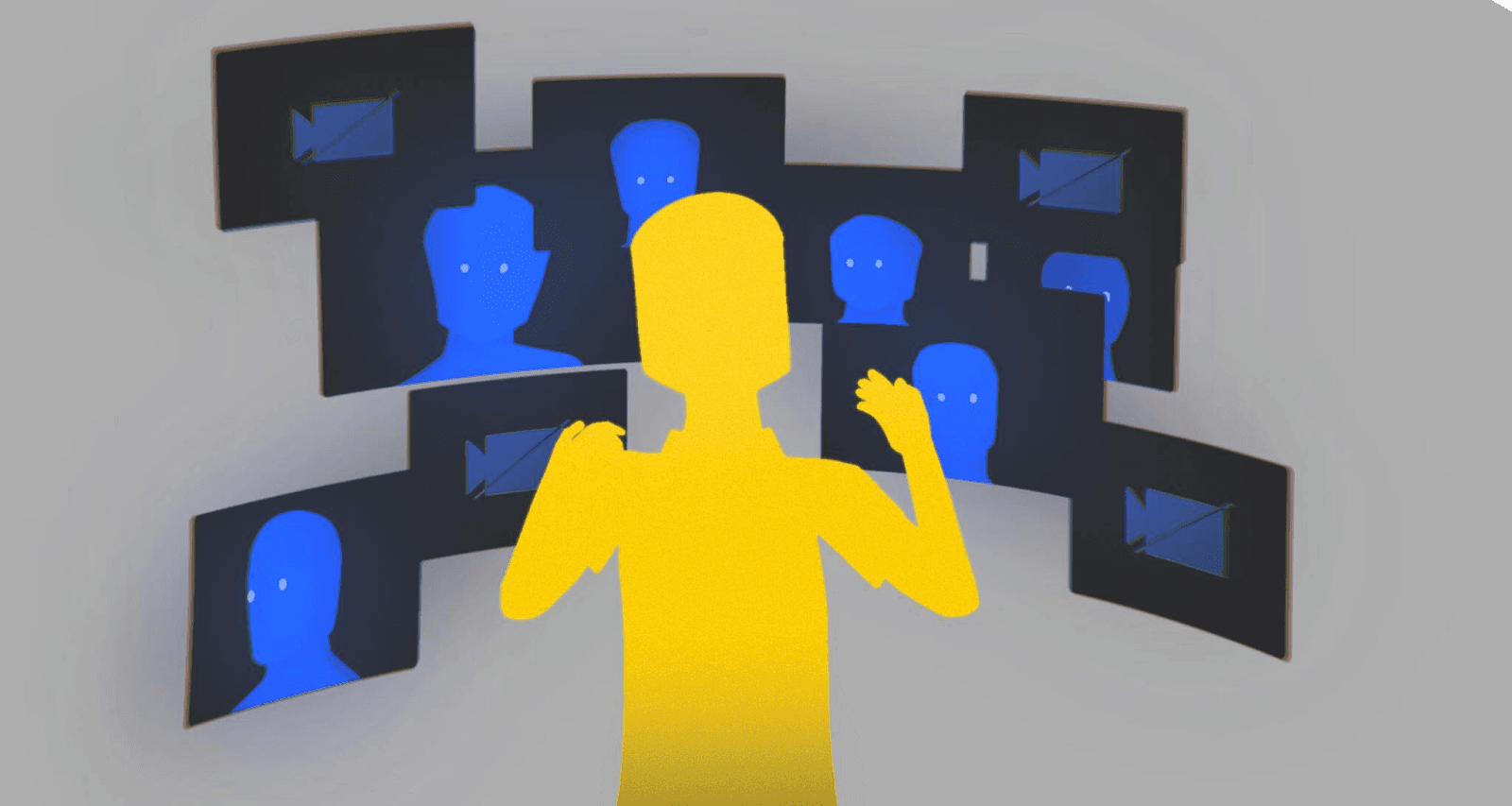
A semester of online classes has passed—more than enough time for teachers and students alike to fall into a weekly routine that will persist until the end of the school year. For teachers, the start of a class no longer involves a stride across a classroom to plug in their device to an HDMI connector. Rather, classes commence with them already on the other side of the students’ screens. To understand the implications of this change, Stallion interviewed three teachers: Mr. Joey Tejamo, a Grade 6 Math teacher; Ms. Nicole Santos, a Grade 8 and 11 English teacher; and Mr. Raul Bernardo, a Grade 11 and 12 Chemistry teacher. The first question we asked them was “What is the first thing you do when you wake up before online classes?”
Before classes start, it has become a morning ritual for Ms. Santos to do a mini crossword puzzle, a cup of coffee in hand, after checking the day’s news. Mr. Tejamo, who rises even before the sun, always prays that his internet connection will be unwavering throughout the day. Mr. Bernardo does a few stretches before heading for breakfast. All these take place before each of them open Schoology to check their inboxes, which are always open, for any messages from their students. Then, they ensure everything is in order for the lessons they will teach for the day’s classes.
Just being able to check if the proper files, tasks, or slides are in place entails meticulous preparation on their ends. Mr. Tejamo tells us, “You know, I spend more time now preparing for one session of a class than ever before.” He elaborates that there are more variables that are harder to control in the online setup that he must make up for in other areas such as the instructions for a task. Tailor-fitting each and every aspect of his lesson down to the punctuation of his instructions leads to hours of preparation for just one online session. Still, he maintains that regardless of how long he prepares for a lesson, it all comes down to whether or not his students understand it.
During the interview, all three teachers discussed the difficulty of monitoring the progress of their students. Mr. Tejamo used to rely on the smiles or ‘Aha!’ moments from his students as a sign of comprehension—smiles and moments that become even more elusive on a screen and disappear entirely if the student’s video is off. The blurred line of sight of a teacher towards a student’s comprehension is rooted in a topic that was heavily pondered on with each of the three teachers: the lack of a connection with their students, a connection they all miss. Because of this, Ms. Santos is concerned that some students are not getting the attention they need. She recalls, “before, if I saw that a student was kinda lonely or unusually low energy or extremely demotivated, it is so easy for me to talk to them. I could just ask [student], what’s wrong? But now I can’t really do that; I can make kulit on Schoology but if they don’t want to talk to me, I’m not gonna know what they need. There are so many concerns that I used to be able to identify and address that I can’t do anymore.”
Emails and messages from students go a long way in helping the teachers understand where their students are coming from, especially in the online learning setup. By knowing their students’ context, they can adjust accordingly. Mr. Bernardo was smiling during the interview when he mentioned that his students are very vocal about his lessons, as it helps him understand what he can do to help. However, he stressed the importance of being delicate when writing an email or message to make it unambiguous. He argues that with the absence of body language, “instead of an email (clearly) saying you’re feeling this or that, sometimes people get misinterpreted.” At the end of the interview, each teacher came to the conclusion that it really is the lack of connection, of chemistry, between their students that makes the online learning setup as difficult as it is.
Speaking of chemistry, doing actual chemistry in the lab is one of the aspects of physical learning that Mr. Bernardo misses the most. Even the most mundane things such as the smell of the lab that always hints of ammonia to the occasional broken beaker or bunsen burner mishap are memories that carry an air of nostalgia to him. Ms. Santos takes a wistful walk down memory lane reminiscing about experiences with her coworkers and how she used to be able to spontaneously strike up a conversation with a simple “Hi.” Mr. Tejamo fondly recollects memories of the camaraderie formed in recollections.
While the absence of the formerly mundane leaves a gap in the learning experience that appears to widen with each passing day in quarantine, it is beyond the control of teachers and students. For students who feel that today was more taxing than yesterday, they may find comfort and sympathy in the fact that their teachers feel the same; just as both parties continue to adjust to XSEL, the problems students face are often problems teachers also face. For students to recognize this is, Ms. Santos said, “a small thing that will have a huge impact.”
Despite each teacher being interviewed separately, all three reasoned that cooperation between teachers and students is the key factor that will improve the quality of learning at this time. Knowing that the school year will end as it began, online, it seems that collaboration is the foremost way of advancing classes in order to develop relationships and give teachers and students alike a mutual understanding of each other’s context—something that ought to be part of everyone’s daily routine.


