Philippines, Germany partner against the climate crisis
By Jasper Go (11B)
|2 min read
By Jasper Go (11B)
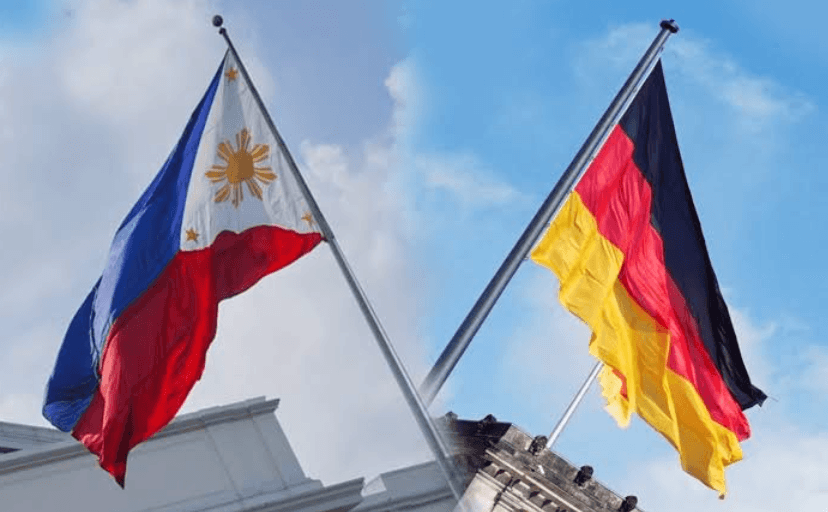
The German government is partnering with the Philippine government to take joint action on climate change. Germany upholds its pledge to reduce global warming and contribute to a cleaner earth on national and international levels.
German Ambassador to the Philippines Anke Reiffenstuel stated in a news release, “We consider the climate crisis the greatest security challenge of our time. The world cannot afford to wait longer. We need to end the fossil age and rapidly reduce emissions.”
At the recent COP27 Climate Change Conference in Sharm El Sheikh, Egypt, German Foreign Minister Annalena Baerbock reaffirmed Germany’s commitment, saying “Germany is putting climate justice at the top of our agenda.” Germany will also increase its annual commitment to six billion dollars for climate funding for developing nations, according to Baerbock.
When it comes to lowering emissions, both in Germany and the Philippines, the transportation sector is crucial. Focusing on public transit produces good and long-lasting benefits, especially for lower-income groups in society, according to Reiffenstuel.
The German development organization Deutsche Gesellschaft für Internationale Zusammenarbeit (GIZ) actively carried out initiatives since 2014, with the goal of modernizing the public transportation system in the Philippines— a crucial industry for cutting emissions. The Jeepney+ NAMA (Nationally Appropriate Mitigation Action) project, which sought to establish a contemporary, sustainable, and environment-friendly transportation system in Philippine cities, was launched by the GIZ (a German government international aid organization) in collaboration with the Department of Transportation (DOTr).
According to a GIZ report from 2016, the Philippines had 250,000 jeepneys, with 55,000 of them serving Metro Manila alone. They are the largest contributor to greenhouse gas emissions in the transportation sector, accounting for 40% of all vehicle journeys. The project’s goal is to replace diesel-powered cars with electric jeepneys and other public transportation vehicles that adhere to the Euro 4 emission standard by 2026 in order to modernize the fleet and decrease the percentage of diesel-powered vehicles by 22%.
Agriculture is another important yet susceptible industry impacted by the climate problem, particularly in Mindanao. The livelihood of farmers is in jeopardy as typhoons, floods, and droughts—all brought on by the climate crisis—become more frequent and catastrophic. In collaboration with the Philippine Rural Reconstruction Movement (PRRM), World Vision, and GIZ, the German government is educating farmers about environmentally sound techniques that would not reduce their crop output while also assisting them in adapting to climate change.
References:
The Manila Times. (2022, December 5). Germany, Philippines address climate crisis. The Manila Times. Retrieved from: https://www.manilatimes.net/2022/12/05/expats-diplomats/germany-philippines-address-climate-crisis/1868984
Ph, Germany take joint action vs. Climate Crisis. (2022, November 29). Retrieved from: https://www.pna.gov.ph/articles/1189695
Tamayo, B. E. (2022, November 29). Germany to modernize ph jeepneys. The Manila Times. Retrieved from: https://www.manilatimes.net/2022/11/29/news/national/germany-to-modernize-ph-jeepneys/1868238