Racing in eSports: From Asphalt to the Screen
By Raphael Lee
|5 min read
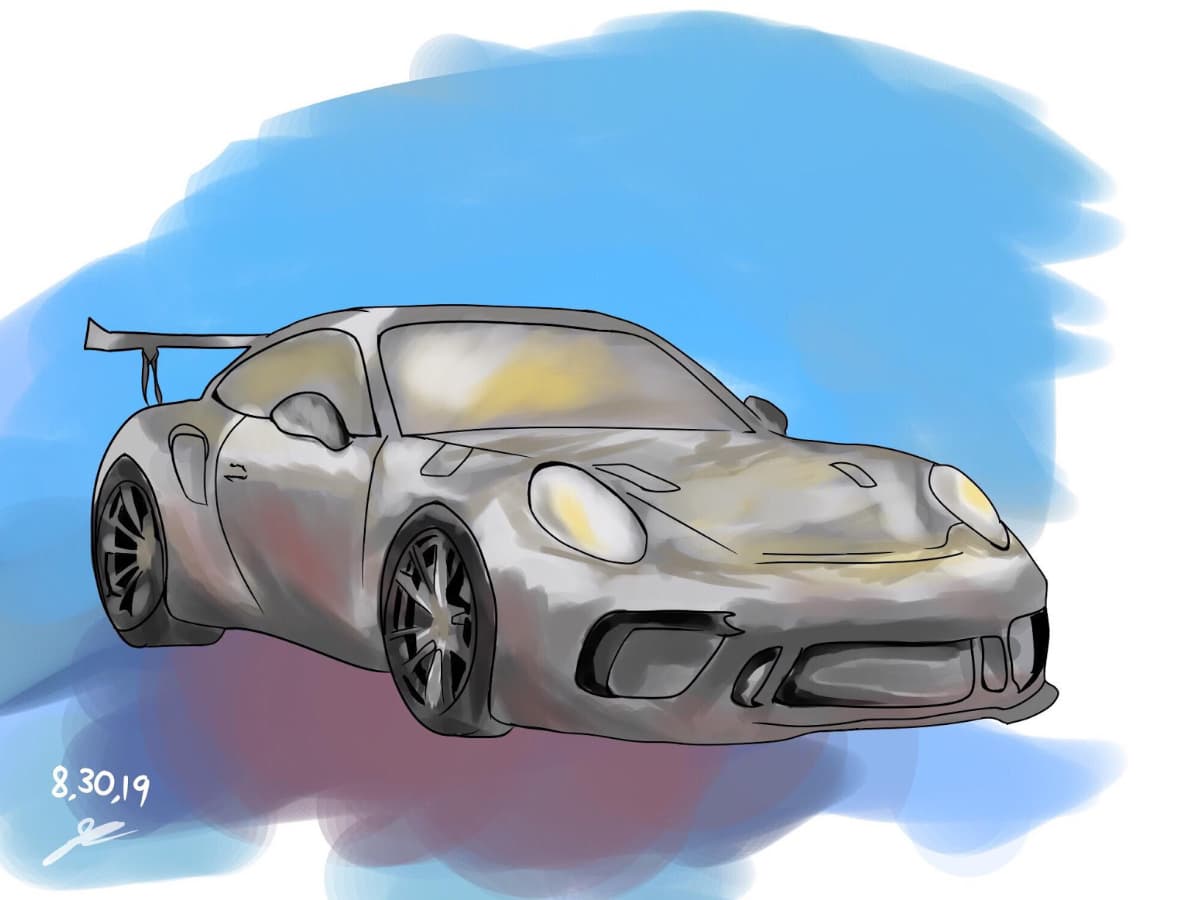
Gamers Rise Up! Society has taken a different turn in this new era of modern technology. When, once upon a time, children would play outside under the sun, kids nowadays opt to stay in their rooms and play video games. And, as more and more people are getting hooked on playing these games, competitions naturally arise. The success of some games are even built on competition, such as Counter Strike or DOTA. These competition-based games have in turn evolved into what we now know as eSports or Electronic Sports, huge competitions where skilled teams of gamers go head-to-head against each other to win a grand prize. You might be familiar with mainstream eSports games like Counter Strike, League, Call of Duty, and others. But, what you might not know is that car racing is also an eSport. Let’s drift right into it!
eSports Racing: A History
Back in the old days, when someone wanted to race competitively, they had to buy a car and participate in numerous events to gain sponsors and influence. But because of current entertainment and technology, it is now possible to have a racing experience in the comfort of your own home. Even before eSports moved into the big leagues, there were already numerous racing simulation games being released. These games gained popularity due to their immersive nature, where the player feels as if he is actually driving the car.
One of the first ever simulators was Gran Turismo back in 1997, which was able to replicate car models, sounds, and handling realistically by 90s standards. Because of the incredible features of the simulator, people went crazy over it and it became one of the best selling games of the Playstation 1. Then came other simulators like rFactor in 2005 and iRacing in 2008, paving the way for eSports. These games allowed for increased tweaking and modding, as players would add and model different cars and tracks.
Officially, eSports racing didn’t emerge until 2016 with the Forza Racing Challenge, which featured the Forza Motorsport game. The competition was open to anyone who had a copy of the game and its objective was to find the best Forza player in the world. Teams formed and the best players battled it out tournament style all over the world. The top players were then sent to an invitational event and one world champion was crowned.
At present, the biggest eSports racing titles include F1, iRacing, Gran Turismo Sport, and even NASCAR. And racing is slowly gaining even more interest as an eSport due to its fast-paced, high adrenaline nature similar to favorite shooting games. In addition, prize pools are rising too, with iRacing holding a US$100,000 grand prize for 2019. The highest prize so far is US$1million for an endurance eRace in Las Vegas.
Video Games vs. Reality
How one wins in eSports racing is of course, to get 1st place, which is done by being the fastest. But it’s not all that simple. In recent years, game developers like Kunos Simulazioni, the developers of Assetto Corsa, base their simulation on real racing equipment and experience. The game even features laser-scanned race tracks and was praised for its incredibly realistic car handling, complete with fuel consumption and tire wear. Video game drivers are then forced to drive like the “real guys,” managing their conditions and pacing themselves so as not to wear themselves nor the car out too much.
These games are becoming so close to reality that virtual racing drivers are even offered opportunities to become part of a real racing team. An example of one such opportunity was the Gran Turismo Academy: dating back to 2008, it wasn’t officially an eSports event, but its event flow and tournament-style races were much like the eSports racing events today. The special competition wanted to test the best Gran Turismo players, and the winner would get to train with Nissan’s official racing team and get a chance to become a licensed racing driver. Such a competition existed because the driving skills in the simulations can be translated to their real life counterparts, unlike other eSports like CSGO or DOTA. Just like the simulations, eh?
I myself play simulation games too like Assetto Corsa and Dirt Rally 2.0, and after constantly playing the game, I believe my car control skills in real life have improved simply because of the harsh realistic handling I had to adjust to. My point is that one shouldn’t underestimate the skills of eSports drivers. For instance, there was this case wherein Enzo Bonito, an eSports driver, beat former F1 champ Lucas Di Grassi on a real track with real cars by half a second. Mad skills right there!
Other events also test capabilities of drivers aside from speed, such as the numerous 24 hour endurance races in iRacing. Driving for 24 hours, whether virtual or in real life, is extremely tough. In preparation for these events, many train for long hours to master driving techniques and develope a race pace, similar to running a marathon.
Welcome to a New Age
Overall, eSports racing is gaining popularity because of the caliber of skill displayed, growing sponsors, and accessibility to the public—It’s easier to watch eSports nowadays since the coverage is usually available on YouTube. Sponsors like Mercedez and Red Bull are stepping in to sponsor individuals and teams for eSports. Real racing drivers are also supportive of eSports drivers because of the potential of these players to become real racers with both skill and popularity, which could give new vigor to the racing industry. What’s more, even people like me and you can enter eSports through the open qualifiers being held by the F1 eSports series.
We are in a new age of competitive gaming, one wherein players are molded by real life conditions in the gaming world and battle it out in an intense show of pure skill. And for once, it doesn’t have to be about guns.
Now, excuse me as I go play “pretend” racecar driver online.
Image: John Paul Sabater, 2019


