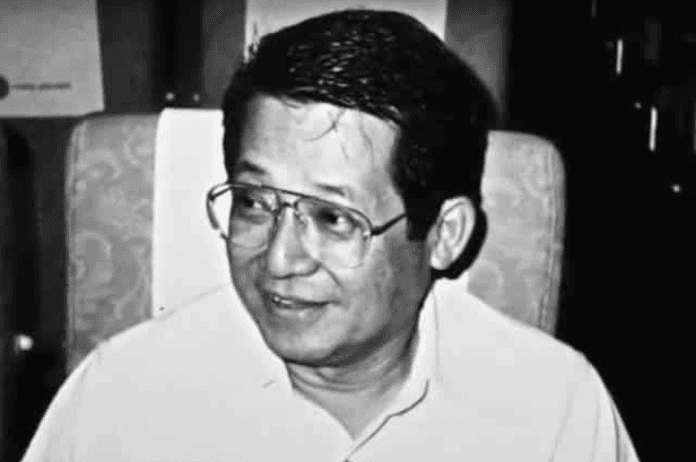
<strong>Remembering Ninoy Aquino</strong>
By Yeshua delos Reyes (11H)
|2 min read
By Yeshua delos Reyes (11H)
“I have weighed all the virtues and faults of the Filipinos, and I have come to the conclusion that the Filipino is worth dying for.”
August 21, 1983 marks a historic day in Philippine history. It is remembered as the day Ninoy Aquino was assassinated on the tarmac of the Manila International Airport.
Benigno ‘Ninoy’ Aquino Jr. was a Filipino senator who is most known for being the major political rival of Former President Ferdinand Marcos, Sr. Ninoy was an opposing force in the government full of Marcos loyalists, criticizing the flaws of the plans and projects of the administration.
Upon the declaration of Martial Law in 1972, Ninoy was detained in Fort Magsaysay. The following year, the senator faced a military tribunal on charges of murder, illegal possession of firearms, and subversion. However, he refused to take part in the trial. In November 1977, Ninoy was found guilty of his charges and received the death penalty, but he was never executed.
In March 1980, Ninoy suffered from a heart attack in prison. Due to his condition, he was allowed to receive medical treatment in the United States where he stayed for three years. Despite knowing that his life would be in danger if he were to return to the Philippines, he came back to negotiate with President Marcos in 1983.
As Ninoy was about to step onto the tarmac, he was shot in the head. There have been multiple arrests and investigations regarding the matter of who ordered the killing of Aquino. However, the truth continues to remain a mystery. Ninoy’s death was one of the catalysts which led to the People Power Revolution and the ousting of former President Marcos in February 1986.
The life of Ninoy Aquino exemplifies the full extent of Filipino nationalism. He was proud of his national identity, fought for the country, and died for the Philippines. In a time full of social injustices, Ninoy’s memory prevails as a reminder to fight for truth and justice.
References:
Official Gazette. (n.d.). Ninoy Aquino. Official Gazette. Retrieved from https://www.officialgazette.gov.ph/ninoy-old/
Martial Law Museum. (n.d.). From Senator to Prisoner: The Story of Ninoy Aquino. Martial Law Museum. Retrieved from https://martiallawmuseum.ph/magaral/from-senator-to-prisoner-the-story-of-ninoy-aquino/


