The Concorde was supposed to change flying forever. Why didn’t it?
By Lorenzo Zarate (12A)
|4 min read
By Lorenzo Zarate (12A)
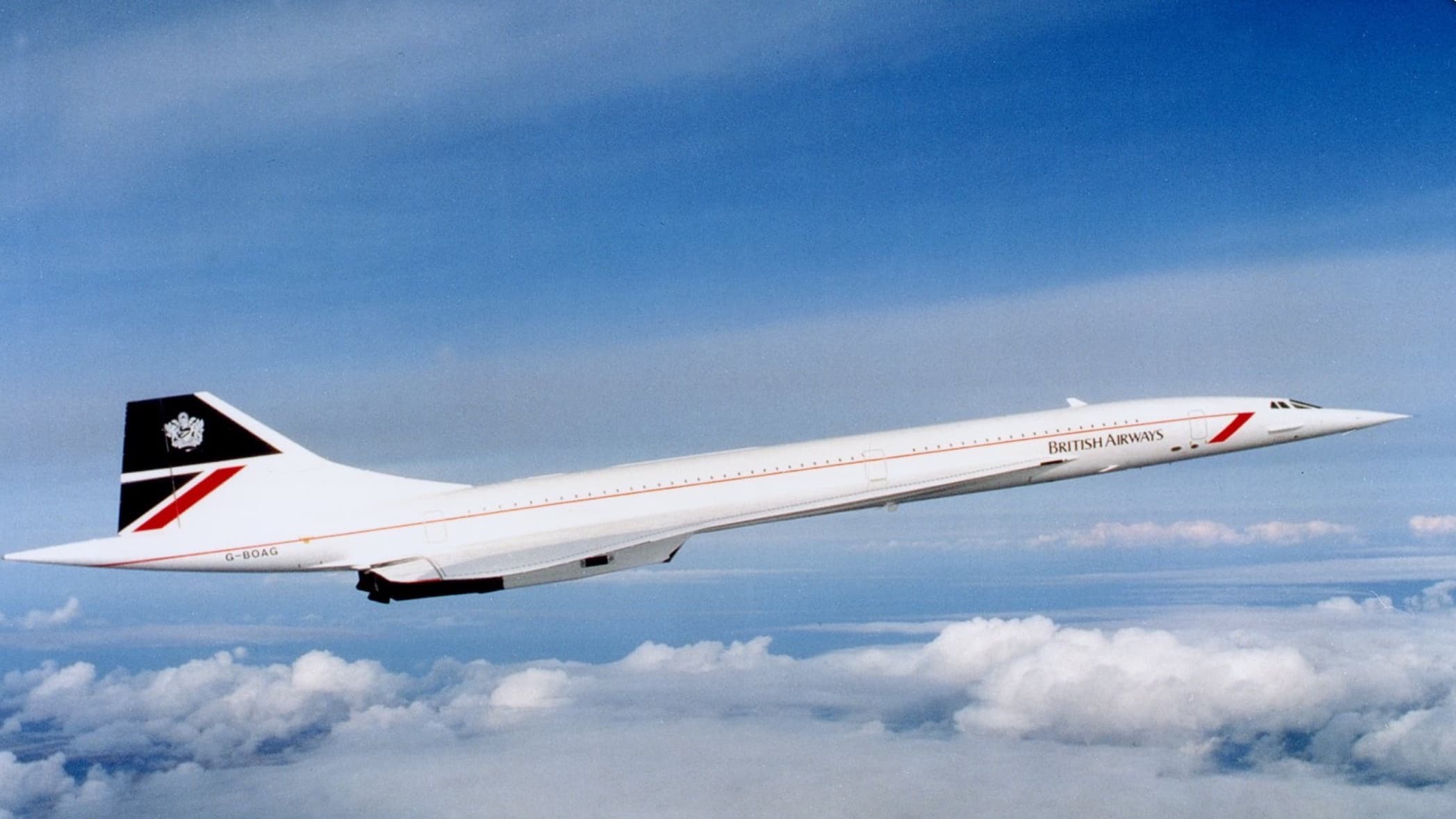
Throughout the storied history of aviation, few aircraft could match the allure and innovation of the Concorde. When the supersonic passenger jet began service in 1976, it was truly unlike any plane that came before it. Boasting a sleek design and a plethora of technological innovations, the plane made breakthroughs beyond just breaking the sound barrier. The Concorde cut travel times in half, turning 7-hour flights on routes like New York to London into 3-and-a-half-hour long short hops, while providing passengers a comfortable and safe experience as they cruised at twice the speed of sound. The Concorde was seemingly destined to fundamentally change flying forever, ushering us into a new era of supersonic passenger travel.
Unfortunately, development costs had far exceeded initial estimates, and the project ultimately proved to be a massive commercial failure. Only 20 aircraft were ever built, and a mere 14 were used in passenger service, far from the hundreds initially planned. Over its nearly 30-year operational history, the jet only ever served two airlines, British Airways and Air France, both of whom struggled to make the Concorde profitable. Nowadays, the plane that was supposed to be the next big leap forward in commercial aviation sits in museums as a relic of a short-lived period when supersonic air travel was a reality. So why did the Concorde, once touted as the plane of the future, never truly take off?
The idea for a supersonic transport or “SST” came after a series of advancements in the 40s and 50s that deepened the world’s understanding of supersonic flight. In 1947, an experimental rocket-powered plane became the first aircraft to fly faster than the speed of sound. Later on, jets would eventually be developed that could ‘supercruise’, or sustain supersonic flight without the need for constant use of afterburners, which would later become a key feature of the Concorde. With the development of supersonic flight on an upward trajectory, the next step seemed to be the creation of a supersonic transport.
An SST could transport passengers to their destinations in just half the time it would take a normal jetliner. Seeing how the possibility of supersonic air travel could revolutionize the industry just as jet aircraft did a few years prior, the race between countries to create the first SST began. The governments of Britain and France agreed to join forces, and the development of the Concorde soon began, with the Concorde showcasing to the world the strength the two European powers had in aeronautical engineering.
The aircraft made several technological breakthroughs with its revolutionary design. Perhaps, the plane’s most distinctive feature was its ogival delta wings, which kept the plane efficient at high speeds while ensuring that it was maneuverable at slower speeds for landing. The plane’s fuel could also be transferred throughout the plane to adjust its center of gravity. Other advancements included a heat-resistant airframe and a droop nose that could lower during take-off and landing to provide better visibility. Moreover, with one-way ticket prices in the thousands of dollars and a promise to deliver unparalleled service, the Concorde attracted an elite clientele, solidifying itself as a symbol of luxury and extravagance. As a whole, the Concorde gave hope to an exciting age that promised to change flying forever.
However, this new age of air travel never really came. Development costs for the ambitious project quickly spiraled, with the initial $130 million budget having ballooned to an astounding $2.8 billion by the time development was completed. Public perception of these types of aircraft also dropped after the first Concorde flights as “sonic booms,” which are loud and explosive sounds, led to many complaints and rising pressure from the public that influenced governments to ban the Concorde from flying over their airspace. Furthermore, environmental concerns were quickly mounting regarding having large fleets of supersonic jetliners.
Costs to fuel the Concorde also greatly limited its profitability as the Concorde entered service in the middle of a full-blown oil crisis, with fuel prices spiking considerably. Eventually, nearly every airline would cancel their orders for the jet, leaving just two operators of the aircraft. Although the Concorde continued to serve passengers for nearly three decades, a fatal crash on an Air France flight that subsequently killed 113 people raised safety concerns for the aircraft. Additionally, aging components and a fall in global air travel following 9/11 exacerbated the Concorde’s design before being put out of service in 2003.
Despite the ultimate failure of the Concorde to permanently change the norms within the aviation industry, it nevertheless displayed ingenuity and revolutionized supersonic passenger travel. Ultimately, the Concorde’s story is one of both triumph and downfall. In the same way that personal shortcomings can spur improvement, the innovations and failures of the Concorde continue to shape the industry today. The same supersonic air travel that was pioneered by the Concorde is now being explored by airlines, with United Airlines purchasing over 50 supersonic jets for use in 2029. Hopefully, future returns of supersonic travel will improve upon the failures of the past to usher in a new era of swift travel, revolutionizing aviation once more.