The Loyola Legacy: 500 Years After Pamplona
By Andrei Ledesma
|3 min read
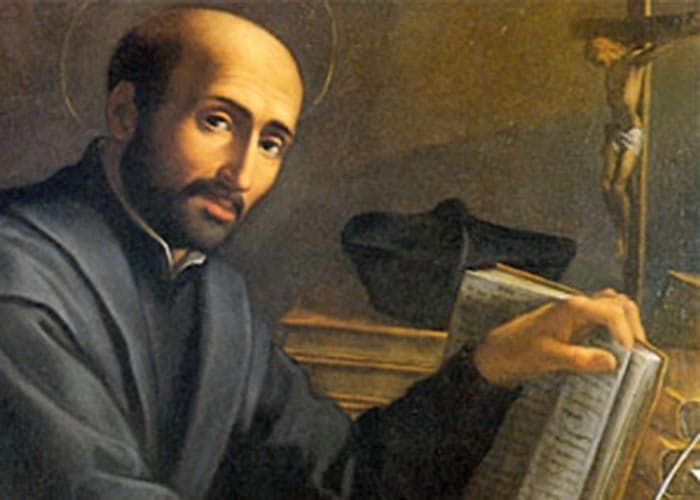
The life of Saint Ignatius of Loyola is a story Xaverians know all too well: starting with his birth into a noble Spanish bloodline in the empire’s Basque region, up until his later years as the Superior General and founder of the Society of Jesus. The young Ignatius always knew he was destined for greatness. In his youth, he began his training as a soldier and quickly rose through the ranks as a result of his physical skill and leadership qualities. Despite this, he was known to be an arrogant man and a quick-tempered womanizer who often challenged people to duels when he lost his cool. He looked up to legendary figures on the battlefield, such as the likes of El Cid and the Knights of Camelot, and hoped that one day, he would have his name alongside theirs. Ignatius had big dreams, and there was nothing to stop him from reaching them.
That was until, in the year 1521, he was injured at the Battle of Pamplona. He insisted that the Spanish army had to stand their ground inside the city’s citadel despite the inevitable invasion and victory of the superior French forces. After hours of intense fighting, he was struck in the leg by a cannonball一 fracturing not only his knee, but shattering his ego as well. He spent months at the Loyola castle healing, bedridden and in excruciating pain. It was during this time that he found solace in reading about the life of Christ and the lives of saints, and the rest is history.
This year marks half a millennium since the conversion of St. Ignatius. After the cannonball moment, he worked tirelessly to spread the word of God. In fact, the fruits of his labor are still very much felt today. When the Society of Jesus was founded centuries ago, the original Companions consisted of a small circle of seven people. Today, there are a total of around 17,000 Jesuits. Armed with their vows of poverty, chastity, and obedience, they have established renowned schools, universities, and hospitals in 112 countries一 conquering virtually every corner of the world. Throughout its existence, the congregation has also chartered countless missions to reach out and cater to the poor and vulnerable.
The Jesuits have also made significant contributions in the realm of science and other similar fields. Among their ranks is Matteo Ricci, who pioneered the Jesuit mission in China. As an adviser to the Wanli Emperor, he disseminated Western knowledge by translating various textbooks in the fields of mathematics and geography to Chinese, along with determining the exact breadth of China in its latitude for mapping purposes. The Society of Jesus has also been responsible for several breakthroughs in the field of seismology, earning it the reputation of being “the Jesuit science”.
Throughout his lifetime, Ignatius has also been credited with penning several letters and books. One of his most notable works is the Spiritual Exercises, which he wrote during the time he spent as an ascetic in a cave in Manresa. Aside from serving its purpose of being a guide for Christians seeking to find God’s will in their lives, its tenets are also used as framework for tackling societal issues being faced in the present.
Closer to home, Saint Ignatius of Loyola is a central figure in Xavier School’s culture. Many of the practices and traditions within the Xavier community can be attributed to him, who serves as one of the Jesuit school’s patron saints. An example of which is the weekly Examen, which has become a habit for many students at the start and end of the week.
The life story of Ignatius is that of a literal sinner turned saint. Early on in life, he knew he was destined for greatness一 and he was right. His efforts have paved the way for the development of the Jesuit community and have changed the lives of a countless number of people. He may not stand among the likes of El Cid and the Knights of Camelot, but he has rightly earned his place as one of the most influential figures in Catholic history.
Sources:
Encyclopedia.com. (2021, July 23). .” Complete Dictionary of Scientific Biography. . Encyclopedia.com. 16 Jun. 2021 . Encyclopedia.com. https://www.encyclopedia.com/people/history/chinese-and-taiwanese-history-biographies/matteo-ricci.
Encyclopædia Britannica, inc. (n.d.). St. Ignatius of Loyola. Encyclopædia Britannica. https://www.britannica.com/biography/St-Ignatius-of-Loyola.
Udías, A. (2016, August 17). Jesuit Contribution to Science 1814–2000: A Historiographical Essay. Brill.


