The Super Blood Moon: Science and Sentiment
By Joaquin Gabriel Malachi Antonio de Castro
|3 min read
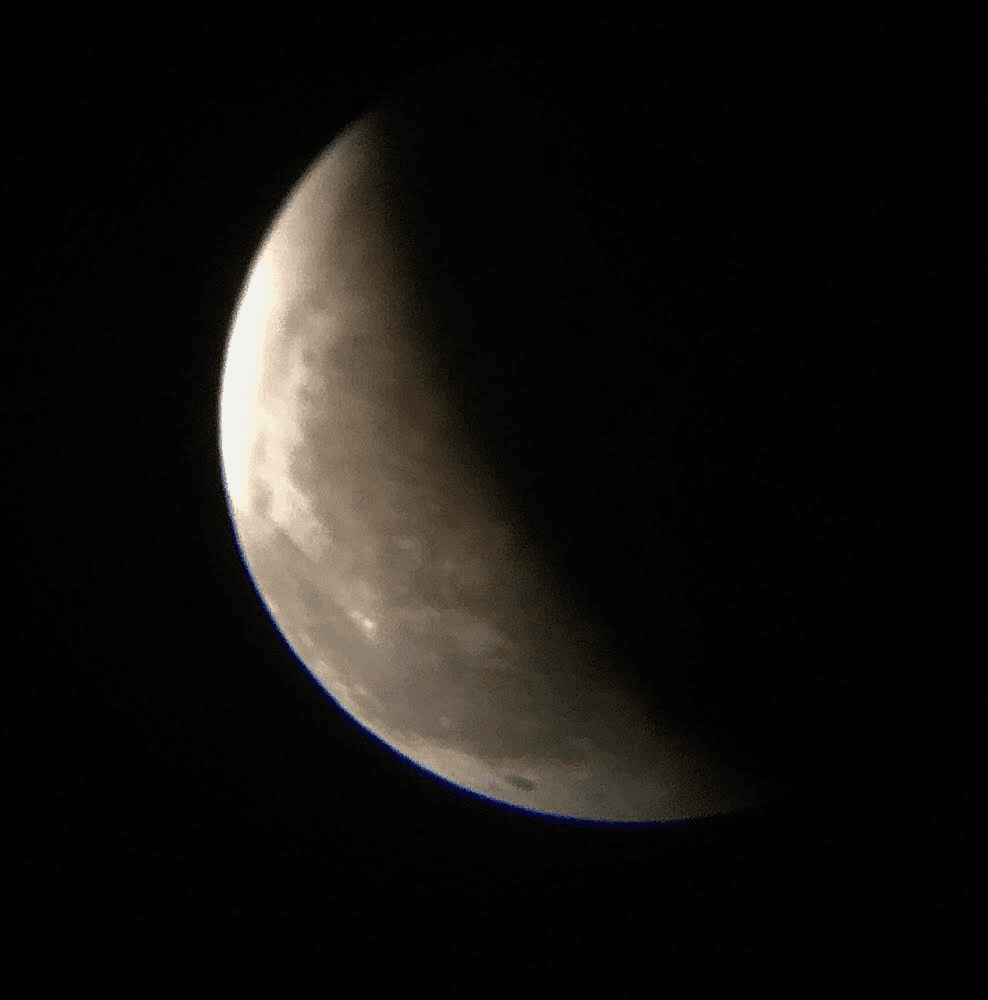
On May 26, at 7:11 p.m., I went outside in hopes of sighting a rare confluence of two significant celestial events: a super moon and a total lunar eclipse. The experience was quite frankly far from glamorous. The door to the balcony was a challenge to open, and it took some effort to dislodge it. While a cool breeze greeted me outside, so did a swarm of mosquitoes. It was their dinner time, anyway.
If I were successful in my moon gazing that night, no amount of jammed doors nor mosquito bites would have eclipsed (forgive the pun) what should have been a magnificent sight. The occurrence of a so-called “supermoon” is the result of our natural satellite’s elliptical orbit around Earth. It can be observed when a full moon is almost at its closest to Earth. Because of this, the moon can appear up to 30 percent brighter and 14 percent larger than it usually is.
A lunar eclipse, on the other hand, is when Earth blocks the sun’s light from reaching the moon. At first glance, this is a simple concept; however, if given more thought, one might wonder why a lunar eclipse does not occur for every full moon or why we even see a full moon at all if Earth would just block the sun’s light. Well, the premise of this question is that the sun, moon, and Earth lie on a 2-dimensional plane. In reality, the moon is at a 5-degree angle to the ecliptic (the plane that the sun appears to be on relative to Earth). Hence, light from the sun can reach the moon’s Earth-facing side without being blocked by the Earth itself. At the same time, lunar eclipses can occur when the moon passes through the ecliptic.
Another feature of the moon during such nights is its reddish hue. This is in fact due to how light scatters in Earth’s atmosphere. Blue light has a higher tendency to be scattered and therefore observed, which is why the sky appears blue when the sun is high. This phenomenon can be attributed to Rayleigh scattering, a process in which higher frequencies of light are scattered more effectively.
As light passes through more particles in the atmosphere, however, there is less blue light to be scattered, and what remains is what we see: colors with lesser frequency. This is also why the sky appears red or orange as the sun dips into the horizon. Similarly, light from the sun in a lunar eclipse passes almost tangentially through Earth’s atmosphere. Light passing through at this low angle inevitably goes through more of our planet’s atmosphere. Much like what happens during a sunset, the light that does reach the moon is tinted red.
All of these phenomena culminate in the wonder that is the Super Blood Moon. Its astronomical significance aside, for many it can also be seen as a communal symbol. I never got to see nor capture the moon that night in its full glory (the picture above was taken as Earth’s shadow was receding, and the circumstances didn’t allow the eclipsed part to be made out). Nevertheless, I couldn’t help but smile as the family next door came out to their balcony as well, searching the sky and expecting to be dazzled. They were likely equally disappointed that the lunar eclipse couldn’t be seen. Yet there was something profound about the anticipation many shared for the event: hope. Regardless of how cloudy the sky may be, or how cliché the following statement might be, hope brings people together. Hope reminds us not just to look up, but also to look down at our shared struggles, and to look forward to what the morning might bring.
Photo by: Joaquin de Castro


