Toxic Positivity: How is it Ruining our Lives?
By Matteo Santos
|4 min read
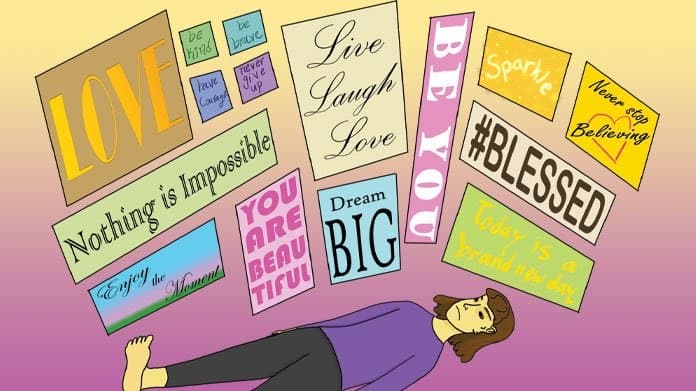
“Good vibes only,” “it’s nothing,” and “just smile” are phrases we often hear or tell ourselves when we are feeling down. We go on social media and see the picture perfect lives of our friends, knowing that they struggle in reality.
The truth is, many of us feel pressured to look as though we are always living our best lives, or even to push “positive vibes” onto people in situations where they don’t really need them at all. These are all manifestations of toxic positivity, a powerful and ever-growing idea present in our society. Toxic positivity is ruining our lives by forcing many of us to suppress certain feelings and put on fake personas when these actions only serve the decline of our mental health and authenticity as humans.
What is toxic positivity?
Toxic positivity is an idea wherein we portray ourselves as happy no matter the severity of a situation. By doing this, we mask anything negative in our lives, including our own feelings of sadness and despair. People with this mindset generally force others into the same sunny disposition, which stops them from opening up about anything that may come across as negative.
All of us should still put effort in supporting and encouraging our friends to be happy, but there is a fine line, and crossing it leads to toxic positivity. The phrases above are prime examples of statements which promote toxic positivity. While statements like “it may be hard but you’ll pull through” or, “its okay to feel bad at times but you’ll get through” show the support and the validation of our feelings of sadness. These two statements reveal the defining factor between optimism and toxic positivity.
Toxic positivity covers up anything negative someone might feel, while genuine positivity validates our negative feelings and helps us get out of them. It is important that we keep this in mind and are able to differentiate the two, as a lot of those who have the genuine intent to support, others may be unknowingly practicing toxic positivity.
How does it affect us?
Just like any other negative mindset, toxic positivity can take a toll on our mental health. Many of us have built our personalities around being the “joyful” or “always happy” one in the group. Having people only see this side of you can make it hard to reveal your true feelings, especially if they try to go against the happy personality you have made for yourself.
Take Charlotte Crosby, an ex-member of the Geordie Shore television show, who was known to be lively and spirited due to the persona she has built up throughout the show. However, she has broken down in TV interviews, expressing how she is pressured to keep this personality up, to the point where she no longer feels as if she can let anyone know that she is actually sad.
Charlotte’s story goes to show how toxic positivity can stop us from being able to express our authentic personality and feelings to other people. This becomes more of an issue when we start ignoring our negative problems and issues in life and continue to convince ourselves that everything is okay. Not addressing our feelings and problems will cause them to fester and potentially lead to bigger mental issues.
Studies suggest that when dealing with our problems, it is always better to face them directly. According to Brett Ford (2017) an assistant professor of psychology at the University of Toronto “People who accept [negative] emotions without judging or trying to change them are able to cope with their stress more successfully.” It is never good for us to sit on our problems and try and change how we feel. Instead, we should approach and solve them directly.
How do we stop it?
Toxic positivity is something that develops overtime. Many of us may not even be aware that we are already practicing it. Fortunately, there are still ways that we can stop this damaging mindset from completely taking over our lives.
Supporting and encouraging our friends is never wrong, however, this can easily turn toxic. Instead of using dismissive phrases like “you shouldn’t feel bad” or “don’t bring in bad vibes,” we can take a more realistic and validating approach to encouraging them. We can use statements like, “hang in there, you’ll sort it out eventually,” which acknowledges the negative feelings a person may be going through, but still offers ways in which this person can gain hope and willpower to overcome them.
Toxic positivity is a very personal problem, which is why solving or preventing it has to come from ourselves. We can do this by changing our mindset on our feelings; we should know that it is perfectly normal to feel bad sometimes. Instead of trying to dismiss these feelings overall, it is important to try reaching out to people for help, or examine these feelings by yourself through reflection and discover what may be causing them.
Toxic positivity is one of the most harmful ideas in today’s society. It ruins our lives by making us suppress our feelings and transforming us into a “happy,” but false, version of ourselves. This issue will eventually lead to mental health problems , which is why we must do our best in making sure we do not fall into this destructive mentality. We should remember that, in order to feel true happiness, one must acknowledge every emotion and embrace life’s sad and hard times. Chasing and obsessing over happiness will bring nothing but unhappiness in the end.