Bottled Water: The Billion Dollar Lie
By Miguel Tan (11A)
|6 min read
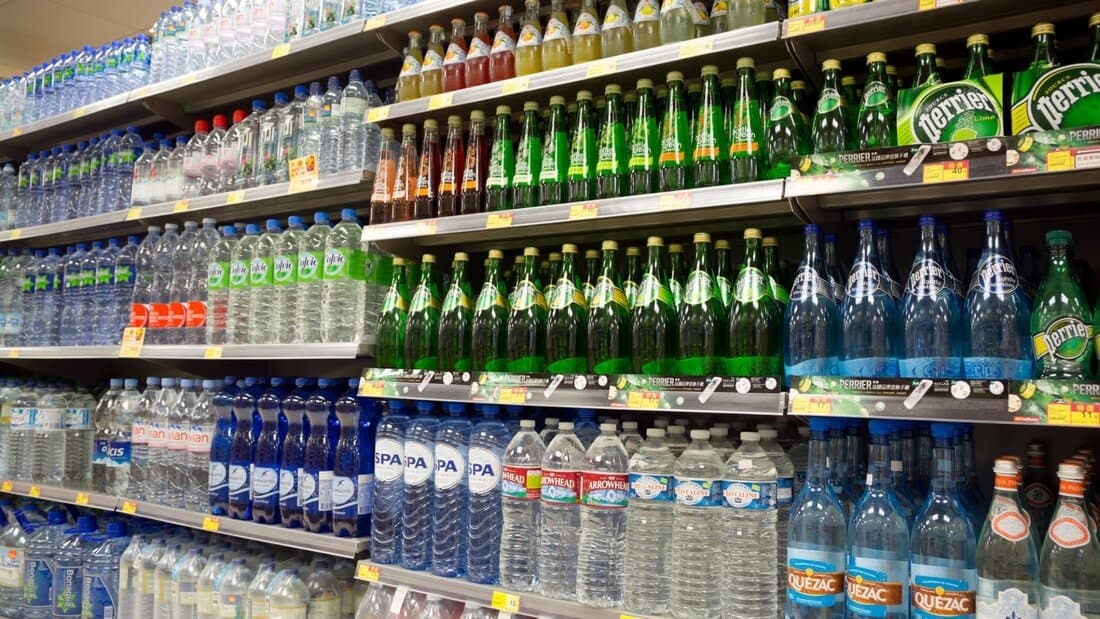
Addressing the misconceptions regarding one of the most successful industries of the Philippines
Photo credits: https://www.wateroam.com/social-awareness/true-cost-of-bottled-water
By: Miguel Tan (11A)
The bottled water industry is one of the most successful and prevalent markets in the world, with revenue generated from supermarkets and convenience stores reaching 2.16 billion USD in 2025 according to Statista (2025). From both local and international companies, bottled water has remained a staple for millions of households in the Philippines. For a large portion of households in the country, tap water is used for bathing, doing the laundry, and many other household chores, but not for drinking.
Tap water is water claimed by the government to be free of impurities and safe for consumption, yet, so many people prefer to drink water in a bottle as an alternative for readily available water that is in many cases, significantly more affordable. According to Vasquez (2017), the consumption of bottled water is attributed to health risk perceptions, and that many Filipinos, regardless of household income, were concerned that tap water was unsafe to drink. This, accompanied by marketing strategies led to the rise of this industry. But this sparks a research question: is bottled water truly safer to consume than tap water?
In 2017, the Philippine Food and Drug administration created the Philippine National Standards for Drinking Water (PNSDW), a set of regulations that aimed to ensure that all drinking water was safe for consumption. These standards included the detection of chemical and microbiological contaminants in the water such as coliform, thermotolerant coliform, and heterotrophic plate count (HPC).
To answer the aforementioned question, Presentacion, et al (2021) published their findings on “The Cost and Quality of Bottled Water in Refilling Stations and Tap Water in Cabanatuan City: A Comparative Study”. This study aimed to compare both the quality and cost of three different water sources in Cabanatuan City, Philippines. To gather samples, the researchers were tasked to collect water from bottled water stations, refilled purified water, and tap water from various locations within the city.
The key findings are thus follows: all samples of tap water from households passed the microbiological, physical, and chemical tests provided by the PNSDW 2017. One sample for bottled water failed the HPC test, another sample failed the total coliform test, and yet another failed all prescribed parameters, including thermotolerant coliform and E. coli which indicates exposure to fecal contaminants. This suggests that readily available tap water according to government standards is significantly more consistent in quality in comparison to its bottled water counterparts, even suggesting that it may lead to serious health concerns. Moreover, it seems that when put to the test, the perceptions of the Filipino people are contradictory to the truth. While the limitations of this study include the lack of nationwide coverage, it still reveals the potential for bottled water to not be as safe as it is marketed to be.
On another note, the study also mentioned the large discrepancy between the cost of bottled water and the cost of tap water. The daily cost of a single individual that drinks bottled water exclusively spends around PHP 36.80, conversely, tap water as an alternative would indicate an expense of PHP 0.56. This indicates that on average, a family of five potentially spends PHP 5, 520 pesos on bottled water, and PHP 84 if replaced with tap water, as per the FNRI guidelines. As such, it can be deduced that bottled water is approximately 66 times more expensive than tap water.
So, why is it that so many households prefer drinking bottled water? Well, there are a variety of reasons. The most pertinent of which is the marketing and advertisement campaigns done by both local and international purified water companies has increased over the years, being labeled as the “marketing trick of the century” by John Jewell, a director from Cardiff University. Jewell described the rise of purified water as an “abandonment of rational thought,” explaining that tap water is scientifically proven to be much safer, and yet, is considered less healthy to consume. He believed that the cause for such a phenomenon was how bottled water is marketed as a product that demonstrated health and sophistication. The same holds true for the Philippines. Many Filipinos perceive the drink as something that will contribute to healthier lifestyles, for both adults and children. On the other hand, it is true that there have been cases where tap water has been contaminated in the past, these are merely outliers. Such cases have only occurred a few times, primarily due to human error or extraneous factors. But it is these few instances that have created an image for tap water, an image of uncleanliness and danger, even when oftentimes it is statistically not an accurate representation of the truth. It is because of this availability heuristic that many households ignore facts and data provided by several researches and studies, even when it is the worse option from both a health and financial perspective.
The success of the industry has also resulted in consequences to the environment. Millions of plastic bottles are disposed of every single year, contributing to the 2.7 million tons of plastics that the Philippines discards annually (Climate Change Commission, 2024). These pieces of plastic cause great harm to biodiversity, endangering several species, disrupting food chains, and destroying habitats. Many organisms mistake plastic for their primary food sources and die from malnutrition, with more than 100,000 wildlife dying each year. Similarly to a lot of products that contain plastic, this growing industry only exacerbates the damage done to the environment.
Going back to the research question: is bottled water safer to consume than tap water? This research has concluded that tap water is far safer and consistently so, when compared to the lack of certainty when consuming bottled water. When viewed from a financial perspective, tap water is a much cheaper alternative. Additionally, the regular consumption of bottled water, without proper segregation of plastic waste, is inherently harmful to biodiversity and wildlife.
The presence of this availability heuristic once again emphasizes the importance of research and critical thinking. In the modern world, propaganda can be seen everywhere, whether subtle or blatant, harmless or dangerous. It has become such a powerful tool for gaining influence in society. Therefore, it is up to the individual, whether to accept intentful propaganda as the truth, or to make well informed decisions based on statistical data, and as Jewell said “rational thought.”
References:
Agence France-Presse. (2024, October 27). Bottled water contains hundreds of thousands of plastic bits: study | ABS-CBN. ABS-CBN. https://www.abs-cbn.com/spotlight/01/09/24/bottled-water-contains-hundreds-of-thousands-of-plastic-bits-study
Combating plastic pollution to secure our planet’s future. (n.d.). https://climate.gov.ph/news/870
Department of Health: Office of the Secretary. (2017, June 23). Philippine National Standards for Drinking Water of 2017. https://www.fda.gov.ph/wp-content/uploads/2021/08/Administrative-Order-No.-2017-0010.pdf
Delventhal, S. (2019, June 25). Bottled Water: ‘Marketing Trick of the Century.’ Investopedia. https://www.investopedia.com/news/bottled-water-marketing-trick-century
Francisco, J. (2014, January). Why households buy bottled water: A survey of household perceptions in the Philippines. International Journal of Consumer Studies. https://www.researchgate.net/publication/263415273_Why_households_buy_bottled_water_A_survey_of_household_perceptions_in_the_Philippines
Manson, H. (2014, May 26). Bottled water is the marketing trick of the century. MarkLives.com. https://www.marklives.com/2014/05/bottled-water-marketing-trick-century
Plastic particles in bottled water. (2025, June 3). National Institutes of Health (NIH). https://www.nih.gov/news-events/nih-research-matters/plastic-particles-bottled-water
Presentacion, et al. (2021, January). The Cost of Bottled Water in Refilling Stations and Tap Water in Cabanautan City: A Comparative Study. International Journal of Advanced engineering Management and Science. https://www.researchgate.net/publication/263415273_Why_households_buy_bottled_water_A_survey_of_household_perceptions_in_the_Philippines
Statista. (n.d.). Bottled water – Philippines | Statista market forecast. https://www.statista.com/outlook/cmo/non-alcoholic-drinks/bottled-water/philippines