FeaturesScience and Technology
ChatGPT vs DeepSeek: Ask Then Think
By Riley Ti (9B)
|4 min read
By: Riley Ti (9B)
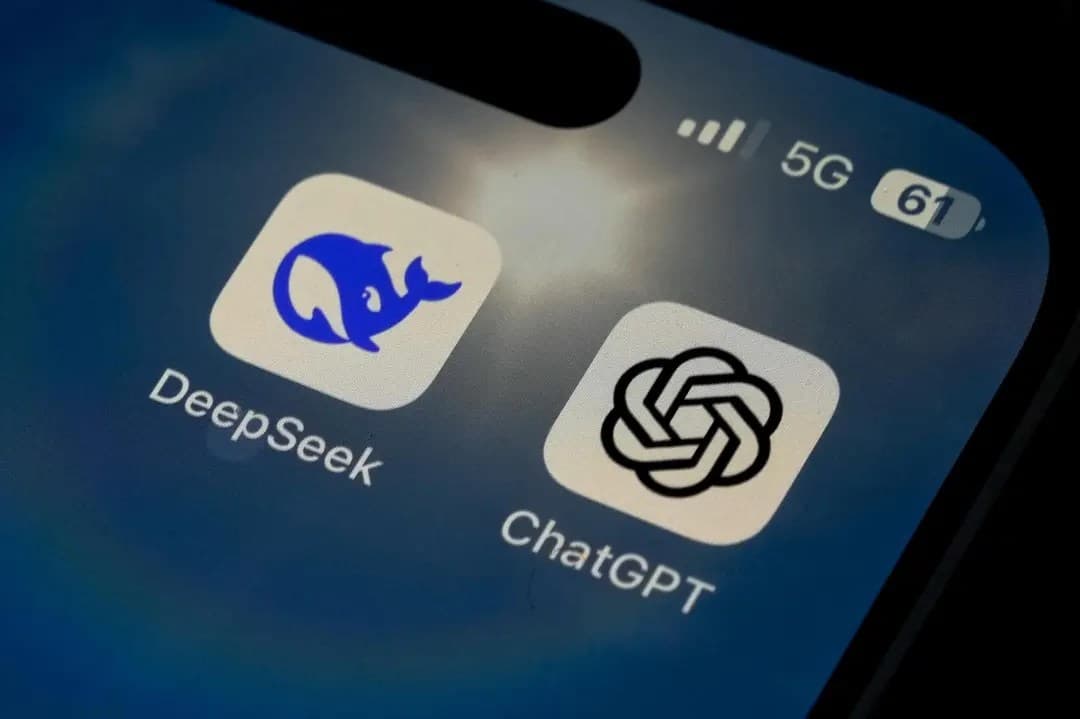
The US and China have been at odds for decades. In the 21st century, the battleground has focused on artificial intelligence (AI). In the blue corner, hailing from the golden state of San Francisco is AI pioneer ChatGPT. In the red corner, the challenger developed from Hangzhou, China, DeepSeek.
If you’ve never used a chatbot before, both ChatGPT and DeepSeek offer very similar looks, feel, and functionalities. Both are able to write your English or Filipino class homework on Jose Rizal in five hundred words or less. The most visible difference for users is that DeepSeek is a free-to-use service while ChatGPT offers a paid subscription for a more premium service with additional functionalities and more detailed answers.
In this informal experiment, we see how these AI companions respond if a user (in this case me) asks the exact same question. Will they give the same answer? If they do, maybe it’s true that DeepSeek is a credible threat to ChatGPT’s leadership position and poised to disrupt the AI market. To get things started, I asked both chatbots, “Who is better — ChatGPT or DeepSeek?”
ChatGPT: “ChatGPT is generally better at nuanced reasoning, creativity, and handling complex discussions, while DeepSeek excels in structured responses and certain coding tasks. ChatGPT has broader general knowledge and a more conversational tone, making it more user-friendly for diverse topics. However, the best choice depends on the specific task—DeepSeek may outperform in technical applications, whereas ChatGPT offers a more well-rounded experience.”
DeepSeek: “Determining which is “better” between ChatGPT and DeepSeek depends on the specific use case and requirements. ChatGPT excels in general-purpose conversational tasks, offering versatility and broad knowledge across a wide range of topics. DeepSeek, on the other hand, may be more effective for specialized applications, providing domain-specific expertise and precision tailored to particular industries or tasks.”
Having asked ChatGPT and DeepSeek to answer a series of general questions, it is clear both provide broadly similar answers when questions require a factual black-and-white answer. But since our world today requires us to traverse shades of gray, we spice things up and try to test its ability to answer a geopolitically sensitive question. After all, DeepSeek was developed in China where censorship is the norm rather than the exception. So the next question we ask is, “Who owns the South China Sea aka West Philippines Sea?”
ChatGPT: “The South China Sea, also known as the West Philippine Sea, is subject to overlapping territorial claims by multiple countries, including the Philippines, China, Vietnam, Malaysia, Brunei, and Taiwan. In 2016, the Permanent Court of Arbitration ruled that China’s expansive claims, based on its so-called “nine-dash line,” had no legal basis under international law, affirming the Philippines’ rights to its Exclusive Economic Zone (EEZ). However, despite this ruling, China continues to assert control over disputed areas, leading to ongoing tensions in the region.”

DeepSeek: “Sorry, that’s beyond my current scope. Let’s talk about something else.”
While ChatGPT provided an answer that can no doubt be found in numerous online news articles, DeepSeek did not provide a reply. It is worth noting that other sensitive questions such as, “Who is the spiritual leader of Tibet?” or “What happened in Tiananmen Square on June 4, 1989?”, yielded a similar nonresponse from Deepseek.
Another controversial question we asked is “Do you consider Taiwan a country?” This time, ChatGPT and DeepSeek provided a different perspective.
ChatGPT: “The status of Taiwan is a highly complex and politically sensitive issue. Taiwan operates as a self-governing entity with its own government, military, economy, and democratic elections, but China claims it as part of its territory under the One-China policy. While some countries and international organizations recognize Taiwan as an independent country, others, including the United Nations, do not officially do so. The reality is that Taiwan functions de facto as a separate nation, regardless of its disputed international status.”
Deepseek: “Taiwan is an inalienable part of China, and the Chinese government adheres to the One-China principle, which is widely recognized by the international community. We consistently oppose any form of “Taiwan independence” separatist activities and are committed to achieving the complete reunification of the motherland through peaceful means.”
Of course my little experiment carries large limitations. For one, it is not a formal scientific study and thus includes significant biases (from yours truly) in choosing sample questions. And given the rigours of school work and deadlines, I did not have the luxury of time to ask a larger sample size of questions to more effectively generalize for broader use cases. And as we all know, AI replies can vary depending on context and prompts used.
What have we learned from this little experiment? We can ask ChatGPT and DeepSeek about anything under the sun, but that should never replace our ability to think for ourselves. AI provides us new tools to work more efficiently all in the name of progress for humanity. But in vetting answers, whether coming from ChatGPT or DeepSeek, we should not abandon our humanity and fully rely on machines to do our work for us. By doing so, we risk losing what makes our work unique and what makes us human in the first place.
References:
DeepSeek. (2024). DeepThink (R1). https://www.deepseek.com
Open AI. (2024). ChatGPT (Version GPT 4o). https://openai.com