How Drones Are Revolutionizing Medicine
By Kai Wyn Uy (11A)
|4 min read
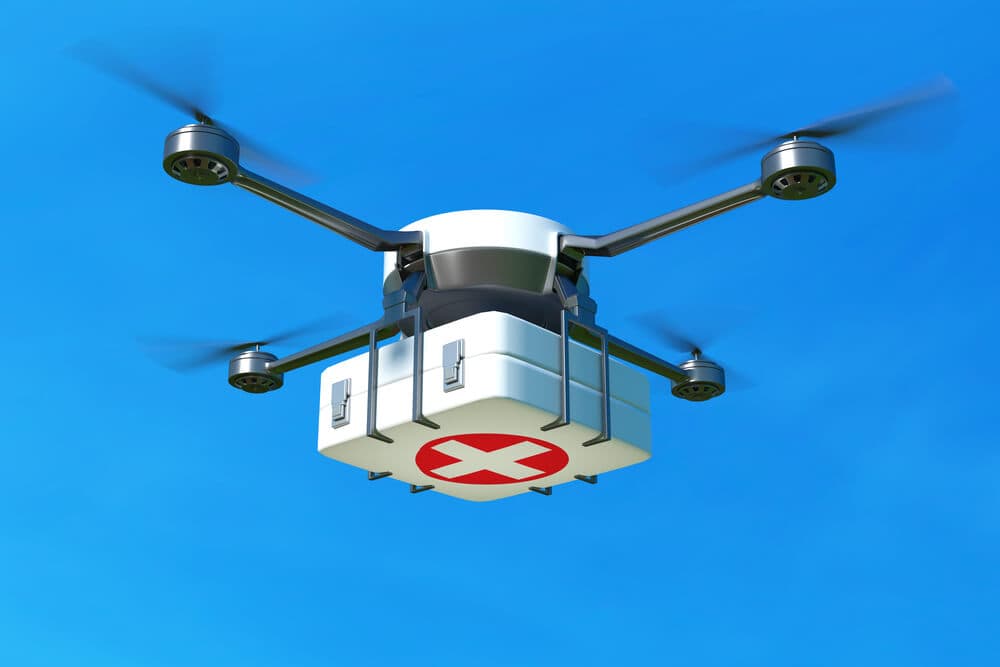
By: Kai Wyn Uy (11A)
Every year, the likes of cardiac arrest, stroke, and drug overdoses are held responsible for the deaths of over 10 million people. These staggering figures can be attributed to a variety of causes, a major one being medical delivery time. With sudden injury or damage to the body, every bit of time, whether it be in the scale of minutes, or even seconds, counts towards guaranteeing a person’s recovery. In this context, the integration of drone technology into healthcare logistics presents an innovative solution to reduce delays and save countless lives (James, 2023). By enabling rapid transport of critical medical supplies, drones have the potential to bridge logistical gaps that traditional methods often fail to address.
Drones have already been put into use to deliver medicine quickly, a recent example of which would be London’s NHS pilot program, which has played a significant role in facilitating rapid transport of blood and chemotherapy drugs. A result of a multifaceted collaboration between the NHS, Apian, and the Alphabet-backed Wing, these drones have massively improved medical delivery, shortening transportation times that previously posed challenges for critical medical care (Prescott, 2024). Amanda Pritchard, NHS Chief Executive, described the drone deliveries as “another extraordinary development for cancer patients” and emphasized the NHS’s commitment to ensuring timely treatment while also cutting costs and carbon emissions (NHS, 2022).
This joint venture has seen definite results. The journey between Guy’s Hospital and St Thomas’ Hospital, which takes over 30 minutes by road, can be completed in 2 minutes by drone, equating to delivery speeds that are 15 times faster (Bell, 2024). Similarly, on the Isle of Wight, drones have revolutionized the delivery of chemotherapy drugs, reducing what would typically require a four-hour journey by road and sea to just 30 minutes by air – shaving off hours in delivery times (Sollof, 2024). Even in trials conducted in Northumbria, drones demonstrated greater efficiency over longer distances of over 80 kilometers, cutting delivery times while covering direct flight paths inaccessible to ground vehicles (NHS, 2024).
Further development and application of drone technology holds a diverse range of potential benefits. In congested cities like Manila, Jakarta, and Sao Paulo, drones can exploit their access to the air to bypass poor city planning and traffic. In such areas, response times can be cut by even greater factors than those seen in the UK, enabling drones to treat emergency cases more effectively and providing faster access to life-saving interventions. For instance, drones equipped with defibrillators could be deployed to assist individuals experiencing cardiac arrest, potentially bridging the critical gap between the emergency call and the arrival of paramedics. Similarly, in regions prone to natural disasters, where roads may be blocked or entirely destroyed, drones could serve as a lifeline by delivering essential medicines, vaccines, or even portable medical equipment to affected populations.
This potential isn’t only limited to emergency medicine. Drones are already being used to support routine healthcare operations in remote or underserved areas. Countries like Rwanda and Ghana have demonstrated the effectiveness of this approach, where drone networks have already been employed to transport blood supplies and vaccines across challenging terrain and developing infrastructure. In these instances, drones have proven not only to be faster but also more reliable and cost-effective than traditional delivery systems. This is especially crucial for rural regions where healthcare facilities often face significant delays due to logistical obstacles and challenges.
Another key benefit of drone based medical delivery would be the traffic-related effects it has on the road. Demand for medical transport vehicles could drop as drone deliveries slowly start to take a deeper foothold in the medical industry. Taking these vehicles off of roads would greatly assist in conserving gas and energy to reduce carbon emissions, as well as being a minor factor in reducing traffic congestion in densely populated areas.
However, the limitations of this technology should continuously be taken into consideration. Governmental regulations for instance must be adapted to new occupants within their airspace. Dense urban areas with high levels of air traffic necessitate the introduction of additional airspace regulations and safety protocols to ensure the safety of these machines, something that hasn’t been implemented in the many developing nations where this tech is needed the most.
Ethical issues also surround the implementation of drone-based medical deliveries. Governments must ensure our right to data-privacy is upheld. In addition to the locational information companies may have access to on their drones, they may also hold access to a person’s medical data. The stealing and selling of customer data has been a growing problem in today’s day and age, something that in the context of medical drone deliveries, can be exacerbated by an unconscious victim’s incapacity to give consent. The potential of drone-based medical delivery to reshape healthcare is immense, but its widespread adoption hinges on addressing these challenges proactively. Balancing innovation with ethical safeguards, regulatory updates, and infrastructural readiness will be key to unlocking the full promise of this technology.
References:
James, G. (2023). Four benefits of drones for the healthcare industry. Healthcare Today. https://www.healthcareittoday.com/2023/08/02/four-benefits-of-drones-for-the-healthcare-industry/
Prescott, K. (2024). NHS drones fly blood samples in UK skies for first time. The Times. https://www.thetimes.com/business-money/technology/article/nhs-drones-fly-blood-samples-in-uk-skies-for-first-time-rjxqprk8s
Bell, B. (2024). NHS drones deliver chemotherapy drugs in the UK. BBC. https://www.bbc.com/news/articles/ckgnnpezd7mo
NHS England. (2022). World’s first chemo drone delivery marks NHS birthday. NHS. https://www.england.nhs.uk/2022/07/worlds-first-chemo-drone-delivery-marks-nhs-birthday/
NHS Blood and Transplant. (2024). Drones successfully fly blood packs in longest ever beyond visual line of sight flights in UK first. NHS. https://www.nhsbt.nhs.uk/news/drones-successfully-fly-blood-packs-in-longest-ever-beyond-visual-line-of-sight-flights-in-uk-first/
Sollof, J. (2024). Drones deliver urgent blood samples for Guy’s and St Thomas’. Digital Health.
https://www.digitalhealth.net/2024/11/drones-deliver-urgent-blood-samples-for-guys-and-st-thomas/