Infrared Contact
By Coen Sy (11A)
|5 min read
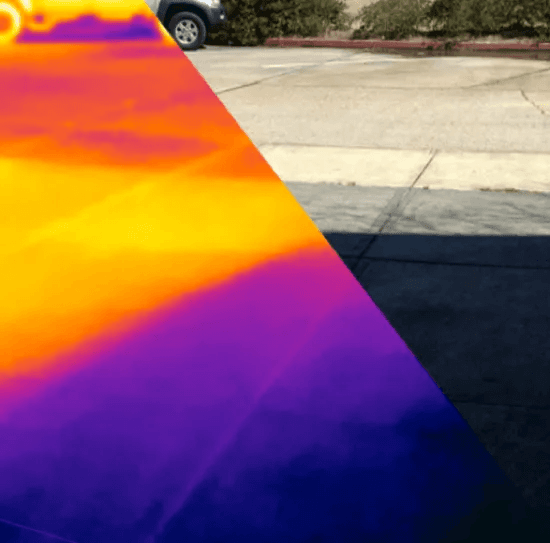
Photo credits: WIRED (2014)
By: Coen Sy (11A)
Infrared radiation is typically how movies and films depict heat vision and is closely related to heat energy. According to Energy Education (n.d.), infrared radiation is normally absorbed by molecules, which causes them to move faster. Similarly, LibreTexts (n.d.) mentions that heat energy is measured as the average kinetic energy of a specific object/item on a molecular level. This means that if the object itself is moving, it does not contribute to its heat energy. Heat energy only takes into account the vibrations of the particles that make up the object. This is also why objects stop moving completely at absolute zero. This year, 2025, scientists have been able to let human vision come into contact with infrared radiation which lets people “see infrared radiation” as visible light.
In the electromagnetic spectrum, or the continuous spectrum, visible light is the only kind of radiation that can be absorbed and interpreted by human eyes. Robot sensors like cameras can be fitted to absorb and record all kinds of radiation, which allows us to know how much of that radiation is present in a specific area. Each radiation in the electromagnetic spectrum is a wave of energy that oscillates (repeatedly changes its direction to form a wave-like pattern) at specific frequencies. These frequencies are proportional to the energy of these radiations, meaning that a faster oscillating radiation wave has higher energy (high frequency means faster occurrences of oscillation and higher energy). Infrared is lower than visible light on the electromagnetic spectrum; therefore, in order for humans to see infrared, either human eyes have to adjust to infrared wavelengths, or infrared wavelengths have to increase in energy to become visible light.
According to The Guardian (2025), researchers first came up with nanoparticles that absorb infrared radiation and re-emit the radiation as visible light, and injected these nanoparticles into the retinas of mice, which allows them to see infrared radiation as different colors within the visible light spectrum. This works by decreasing the wavelengths of infrared radiation into a corresponding wavelength in the visible spectrum, making it so that different radiation strengths are equivalent to different colors similar to visible light. Additionally, because infrared radiation pierces through human eyelids, the contact lenses allow for humans to see infrared light significantly clearer with their eyes closed compared when their eyes are open. This is because when their eyes are open, human eyes are able to detect two sources of visible light radiation, one from the normal environment, and the other from the infrared contacts. Because of this, when the humans testing the contact lenses closed their eyes, the visible light that they were able to see only consisted of the radiation re-emitted by the contact lenses (Turner, 2025).
According to Phys.org, the nanoparticles are currently limited to absorbing radiation from a specific LED light source because the nanoparticles are not sensitive enough to capture every single infrared radiation. The limitations in capturing infrared radiation come from the fact that the nanoparticles were created to absorb and re-emit wavelengths close to visible light for ease of use, however researchers are working on giving the contacts the ability to absorb and re-emit all forms of infrared radiation.
In general, nanoparticles are described as small materials with sizes ranging from 1nm (nanometer) to 100nm. These materials exhibit unique properties both chemically and physically that differ from normal everyday objects that we interact with due to their size (Science Direct, 2019). Before the upconversion of frequencies can be explained, the normal absorption and emission of electromagnetic radiation has to be explained. When atoms absorb energy, its electrons move upwards to higher energy levels based on the energy absorbed. This happens because the absorbed energy is used to counteract the attractive force between the electron and the nucleus of the atom. The electron being at an “unstable” energy state is described as an excited state. Because this excited state is unstable, it reverts back to its original state and releases the energy back out based on the energy difference between the excited state and the energy level it moved down into. The energy released is what determines the wavelength of the re-emitted radiation. Because of this, when visible light (white light, which contains all wavelengths, meaning all colors combined) is absorbed, the re-emitted radiation is typically reduced due to some of the energy being absorbed and kept by the atom, which is why everyone sees different colors rather than just white. For upconversion of radiation, nanoparticles are used for their special properties for a single atom or absorb more energy, or absorb energy twice to re-emit the energy as a higher wavelength (Edinburgh Instruments, 2021). This works for infrared radiation because it has less energy than visible light, so when the energies of multiple infrared radiation is combined as one, it increases to match specific colors within the visible light spectrum.
This new invention of contact lenses could be a revolutionary discovery for human sight if applied to other segments of the electromagnetic spectrum. When the upconversion of infrared radiation to visible light is mastered, similar concepts can also be applied to other frequencies greater than that of visible light. Additionally, downconversion of portions of the electromagnetic spectrum could also allow for people to see UV, x-ray and even gamma rays. This would allow for a better understanding and explanation of how electromagnetic radiation can be seen all around the world, and as a byproduct/product of different machines (like computers and screens). As for the effect of the discovery of infrared contact lenses, this would be able to help people who have trouble seeing at night because rather than relying on visible light, which is not abundant at night, infrared would be the main source of vision, which is very abundant but slightly weaker at night. Additionally, rather than wearing bulky and expensive night vision equipment, militaries would also be able to invest in smaller and more compact infrared contacts that don’t require power either.
Sources
Allain, R. (2014, April 9). The world looks different through an infrared camera. WIRED. https://www.wired.com/2014/04/the-world-looks-different-when-you-see-in-infrared/
Cell Press. (2025, May 22). Infrared contact lenses allow people to see in the dark, even with their eyes closed. Phys Org. https://phys.org/news/2025-05-infrared-contact-lenses-people-dark.html
Infrared radiation – Energy Education. (n.d.). https://energyeducation.ca/encyclopedia/Infrared_radiation
Khan, I., Khan, I., & Saeed, K. (n.d.). Nanoparticles: Properties, applications and toxicities. Science Direct. https://www.sciencedirect.com/topics/pharmacology-toxicology-and-pharmaceutical-science/upconversion-nanoparticle
Libretexts. (2024, November 5). 4.1: Energy and heat. Geosciences LibreTexts. https://geo.libretexts.org/Bookshelves/Geography_(Physical)/The_Physical_Environment_(Ritter)/04%3A_Energy_and_Radiation/4.01%3A_Energy_and_Heat
Rennie, A. (2025, January 15). What is Upconversion? – Edinburgh Instruments. Edinburgh Instruments. https://www.edinst.com/resource/what-is-upconversion/
Sample, I. (2025, May 23). Seeing infrared: scientists create contact lenses that grant ‘super-vision.’ The Guardian. https://www.theguardian.com/science/2025/may/22/infrared-contact-lenses-super-vision
Turner, B. (2025, May 22). ‘Super-vision’ contact lenses let wearers see in the dark — even with their eyes closed. Live Science. https://www.livescience.com/technology/super-vision-contact-lenses-let-wearers-see-in-the-dark-even-with-their-eyes-closed
Upconversion nanoparticles. (n.d.). Science Direct. https://www.sciencedirect.com/topics/pharmacology-toxicology-and-pharmaceutical-science/upconversion-nanoparticle