Microsoft’s new AI tool claims to be 4x more effective than doctors
By Jacob Siao (11I)
|4 min read
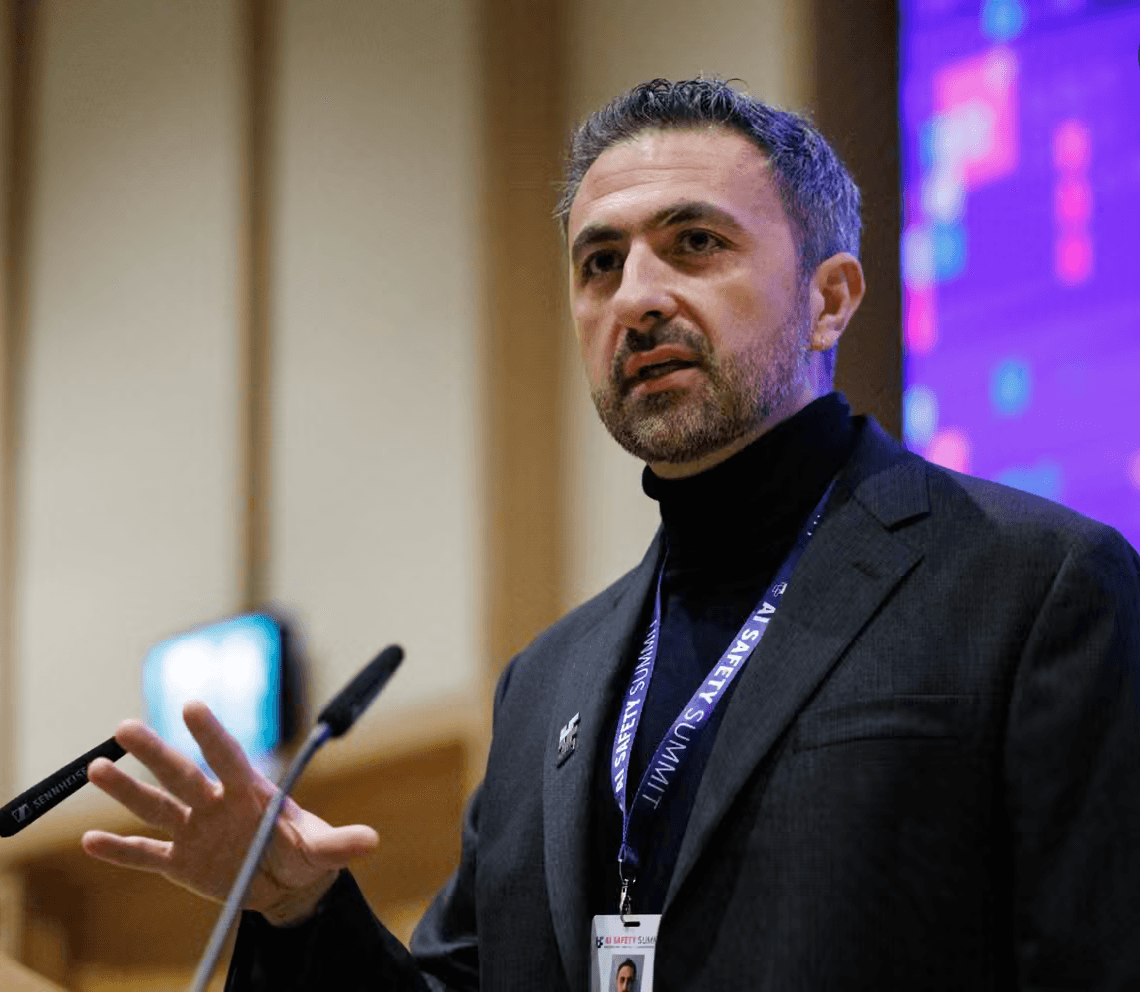
Photo Credits: The Guardian
By Jacob Siao (11I)
LONDON, UNITED KINGDOM – Microsoft has recently unveiled a breakthrough in artificial intelligence that could transform modern healthcare: a medical diagnostic system that the company claims is more effective than human doctors at solving complex cases.
The announcement, according to The Guardian, has drawn attention not only for its ambitious results, but also for how it affects the future relationship between medicine and machine intelligence.
Microsoft describes this system as a potential step toward “medical superintelligence,” raising both excitement for the future and serious questions about how such technology should be used.
The AI, known as the “Diagnostic Orchestrator,” does not operate as a single model but instead combines the reasoning of multiple advanced systems from companies such as OpenAI, Google, and Anthropic. It functions as a panel of virtual specialists, reviewing a patient’s symptoms, asking questions to clarify, ordering tests, and debating different hypotheses before suggesting a diagnosis. This process is similar to how a team of doctors would usually approach a complicated case, but Microsoft claims that its AI can do it faster, more efficiently, and with more accuracy.
To measure performance, Microsoft conducted a study using the Orchestrator on over 300 case studies drawn from the New England Journal of Medicine. These cases were chosen because they have some of the most challenging diagnostic problems. In this controlled setting, the AI succeeded in solving more than 80 percent of the cases, while a group of practicing physicians given the same challenges had only reached about 20 percent accuracy.
Microsoft also highlighted that the AI tended to be more cost-conscious, ordering fewer unnecessary tests while still reaching the correct conclusion. These results, while limited, suggest that AI could drastically reduce misdiagnoses or minor mistakes in difficult cases and improve the efficiency of medical decision-making. However, it is important to note that because the study was conducted by Microsoft itself, the findings may be biased in favor of their technology.
There are so many potential benefits of this technology. For patients, an AI medical assistant could mean faster answers, fewer unnecessary procedures, and a better chance of receiving an accurate diagnosis for rare conditions. Meanwhile, for healthcare systems, the AI tool could mean cutting costs and lessening pressure on many overworked doctors, especially in places with limited access to specialists. In such areas, the AI tool could allow access to expert-level reasoning, ensuring that even people in faraway places can receive good medical advice and care. This could also serve as a powerful educational tool, helping medical students and doctors not only have a higher success at their jobs but also learn from the AI’s step-by-step reasoning.
However, this excitement must be balanced with caution. The controlled study conditions do not mirror real-world practice. In comparison, the human doctors in the study were restricted from consulting colleagues or reference materials, which is far from how medicine can actually be practiced. Also, the system was tested on rare and unusually complex cases, and we cannot yet be sure how it would really perform with routine, everyday medical issues that are more typical to most clinical visits. These are limitations that remind us that high accuracy in one context may not automatically translate into another.
There are also concerns about trust, ethics, and regulation. Even if Microsoft’s AI consistently outperforms doctors during practice trials, the issue of accountability remains unresolved. If a machine makes a wrong call, who is responsible: the developer, the hospital, or the physician who relied on it? Patients may also hesitate to accept a diagnosis from an algorithm, no matter how accurate. The bias in training data, unequal performance across different populations, and risks of overdependence are all challenges that must be addressed before this technology can safely enter hospitals and clinics.
Microsoft says that the tool is not intended to replace doctors, but to help them. Medicine is more than diagnosis. It is a human profession centered on care, empathy, and judgment. An AI may be able to process large amounts of information more quickly, but it cannot sit with a patient, understand their fears, and provide the trust that is at the center of doctor-patient relationships. The future role of AI in healthcare will therefore depend on how well it is integrated into human practice, supporting instead of replacing the professionals who carry out the work of medicine.
In conclusion, systems like Microsoft’s Diagnostic Orchestrator may become one of the most transformative technologies in medicine. If developed responsibly, they could help save lives, reduce errors, and reshape the way healthcare is delivered worldwide. At the same time, society must be careful not to move too fast, and ensure that there is rigorous testing, ethical rules in place, and a commitment to preserving the human side of medicine.
REFERENCES:
King, Dominic , and Harsha Nori. “The Path to Medical Superintelligence | Microsoft AI.” Microsoft AI, 26 Aug. 2025, microsoft.ai/news/the-path-to-medical-superintelligence/.
Knight, Will. “Microsoft Says Its New AI System Diagnosed Patients 4 Times More Accurately than Human Doctors.” WIRED, 30 June 2025, www.wired.com/story/microsoft-medical-superintelligence-diagnosis/.
Milmo, Dan. “Microsoft Says AI System Better than Doctors at Diagnosing Complex Health Conditions.” The Guardian, The Guardian, 30 June 2025, www.theguardian.com/technology/2025/jun/30/microsoft-ai-system-better-doctors-diagnosing-health-conditions-research.
Morris, Stephen, and Melissa Heikkilä. “Microsoft Claims AI Diagnostic Tool Can Outperform Doctors.” @FinancialTimes, Financial Times, 30 June 2025, www.ft.com/content/149296b9-41b6-4fba-b72c-c72502d01800.
Park, Alice. “Microsoft’s AI Is Better than Doctors at Diagnosing Disease.” TIME, Time, 2 July 2025, time.com/7299314/microsoft-ai-better-than-doctors-diagnosis/.