The Age of Wonder
By Matthew Guevara
|5 min read
There’s an amusing moment in the new Justice League trailer when Diana Prince (Gal Gadot) reminds Bruce Wayne (Ben Affleck) of the popular belief that “the age of heroes would never come again.” The irony of hearing this line from a superhero movie that serves as the culmination to four others and the predecessor to at least five more over a total span of seven years was not lost on me. From where we’re sitting, the “age of heroes” isn’t going anywhere anytime soon. There are still too many lessons to be learned, too many obstacles to overcome, and too many people to save. A quick look at any local news channel should put us all on the same page. This is all to say that for this age, we don’t necessarily need new, typical and formulaic superhero movies. We just need new heroes.
Heroes have always seen different forms and different faces. Ancient Greece had Achilles. Medieval Britain had King Arthur. Space-Age America had Superman. Lifted from different texts and meant to embody drastically different standards of collective heroism, these figures were agreed upon by entire generations aspiring to a single vision of how the human being acts in relation to conflict and change. For the longest time, previous generations looked up to Superman as a symbol for their own incorruptible morals and unrivaled strength. With the newer generation, it’s not as straightforward as just adopting him. To some degree, that in itself is impossible.
Traditional superheroes like Superman often established an initial relationship with their audience through a shared sense of home. This tangible, if not literal common ground served to create an illusion of empathy and shared experiences, reconciling the more significant differences between fact and fiction. Basically, he fought for America, and so America rooted for him in the fight against bad guys. That appeal to a geographical definition of nationalism was immensely popular for the better part of 55 years throughout the Golden to Bronze age of comic books. It was what allowed for his unique transformation into a symbol who would come to famously represent “Truth, Justice, and the American Way.” By the end of the century, he was a bona fide cultural icon. Nothing less was to be expected from an entire generation’s paragon of American dominance during the hostile times of the mid-1900s. To quote Jerry Seinfeld, he “came from an American culture that would just say things and do them without any idea how.” That brash optimism is what propelled them into the 21st century, unfortunately leaving younger generations to deal with the consequences. This headfirst dive into a new millennium opened with a divisive election, 9/11 terrorist attacks, Invasion of Iraq, and 2008 economic recession. With each traumatic development exposing the country’s vulnerabilities, people no longer found themselves resonating with the Man of Steel. Superman was the living embodiment of the “American Way,” but no one knew what that meant anymore. He was supposed to be this pinnacle of ethical strength, and yet gone was America, the unwavering light in a world of darkness; the country who couldn’t be bought, didn’t cheat, and never compromised its values for a win. Gone was Superman, who would never again enjoy the same mainstream exposure until the dark and brooding 2013 reboot, where he completely decimates his city and snaps Zod’s neck. Consider that a reflection on how confused the traditional concept of heroism has become.
Enter the millennials—a new breed and nightmare to traditionalists everywhere. Unlike past generations, they don’t buy into the idea of nationalism by proximity. In fact, most of them don’t identify with a particular nationality at all. According to the Global Shapers Annual Survey that Mark Zuckerberg referenced in his 2017 Harvard Commencement speech, the “plurality of millennials in almost every region of the world choose global citizen over any single ethnicity or nationality as the thing that defines them most.” If that wasn’t bad enough news for traditional superheroes, millennials have radically different struggles too. Gone are the days of world wars and cold wars. Nowadays, this new generation finds themselves against things like a volatile stock market and economy, more NASDAQ than Nazi; at the same time, they continue to fight for even more divisive issues like historical revisionism, net neutrality, and gender identity. Such a revolutionary contrast in experiences logically demands an equally revolutionary shift in values, and by extension the general notion of heroism.
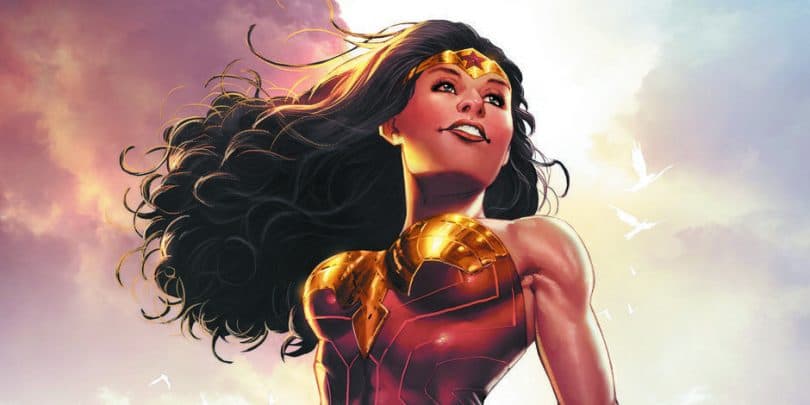
It is at this point that popular culture offers its own liberal solution: a character only eight years younger than Superman whose induction into mainstream consumption only occurred last year. Regardless, it was an induction that I think perfectly captures the progress this new generation continues to fight for everyday. A champion of self-confidence, compassion, and tolerance. She is Diana of Themyscira, daughter of Hippolyta. The Wonder Woman. The same woman who posited that the age of heroes would never come again may very well be the best symbol for this new generation’s brand of heroism as a global citizen herself, as well as a respectable advocate of everything that this new generation cares about. Arguably, her motives are also more selfless. Whereas Superman protects the Earth out of a sense of obligation to his family and time there, Diana protects the same broken and corrupt world, one that her people turned their back on, simply because she knows of what it can become.
Queen Hippolyta: If you choose to leave, you may never return.
Diana Prince: Who will I be if I stay?
This brief exchange alone adds so many dimensions to her brand of heroism that it almost makes up for the past 76 years of underrepresentation. Originally just a statement of female empowerment and an “antidote to the bloodcurdling images of masculinity within the Superhero genre,” her transformation into such a complex humanitarian symbol 76 years later is one of the most celebrated examples of character development today. So just as Superman was the paragon of bravery, strength, and superiority for an entire generation of Americans during the tumultuous times of the 1940s, Wonder Woman is now the paragon of compassion, tolerance, and progress for this new generation who finds their story beautifully aligned with hers. And if you don’t think that’s what the filmmakers had in mind with this movie, allow me to refresh your memory with the time when Captain Steve Trevor (Chris Pine) said “this war is a great big mess, and there’s not a whole lot you and I can do about that. I mean, we can get back to London and try to get to the men who can.” To which Diana replied:
“I am the man who can.”