The Trump-Harris Debate and Its Impact on the 2024 Election
By Kyle Chua-Unsu (11B)
|7 min read
By: Kyle Chua-Unsu (11B)
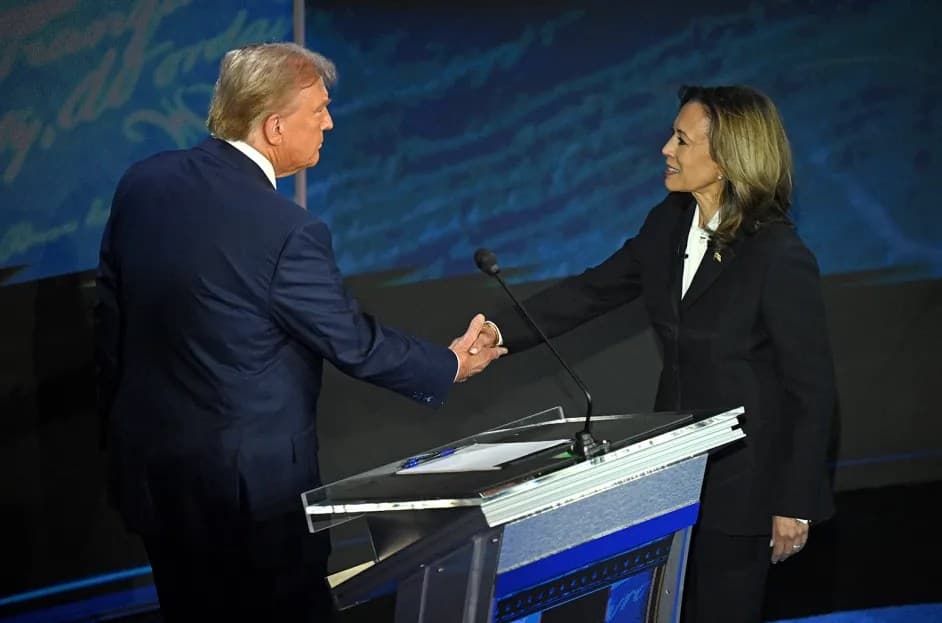
PENNSYLVANIA, U.S.A. – Former United States President Donald Trump and incumbent Vice President Kamala Harris met for their first debate on September 10, following Harris’ recent nomination as the Democratic Party’s presidential candidate. This also marked the first time they met in person, with Harris setting the tone by approaching Trump and offering to shake his hand despite countless insults between the two over the past few months. Political analysts noted the importance of this debate to the upcoming election. With early voting starting in September and Election Day being less than two months away, the debate comes at a crucial time for both campaigns to convince undecided voters to vote for their candidate. Both candidates set out to frame this election as a referendum on the other’s administration, given the unique circumstances of both Trump and Harris, who have served as top-level officials in the White House. Despite key soundbites and effectively delivered attacks throughout the debate, this alone will likely not guarantee a shift in the election for one candidate or the other. The juxtaposition and stark difference between the two candidates is clear, though – truly emblematic of the bitter political polarization and division that has characterized this election season.
Recent History of the Campaigns
The importance of this debate is underscored by the massive failure of President Biden in his June debate against Trump. Appearing incoherent, senile, and mumbling at times, Trump summed up Biden’s performance through his iconic soundbite that made the waves online, remarking about Biden’s gaffes saying, “I don’t even think he knows what he’s talking about.” Biden’s atrocious performance led to calls from top-level Democratic Party officials and campaign donors for him to pull out from the presidential race. On July 21, the oldest-sitting U.S. president made the decision to drop out of the race and endorsed Kamala Harris, to the jubilation and glee of many Democrats. Reshifting the campaign’s focus to Harris, the Democratic Party sought to change the narrative by framing Harris as the candidate for change. Harris, who is currently 59 years old at the time of writing, is much younger than Trump, who is almost 20 years older than her. Thus, despite being the incumbent candidate as the sitting Vice President, Harris constantly emphasized that she would bring change to the country, with her promise of “we will not go back.”
In contrast to the Democrats, Trump rode a wave of high from the June debate, and his campaign doubled down on their attacks against Biden as being unfit for office. Trump’s insults against Biden for his senility were corroborated by the June debate in front of Americans all over the country. Further adding to Trump’s momentum, he would also survive an assassination attempt at his rally in Butler Country, Pennsylvania. The image of Trump lifting his fist after emerging from the ground with a bloodied ear spread rapidly online and almost seemed to cement the former president’s victory in the upcoming election. Right before Biden dropped out of the race on July 19 and following the recently concluded Republican National Convention, Trump was up by an average of three percentage points nationally in polling averages according to The Economist. However, with Harris replacing Biden as the Democratic candidate, the Trump campaign has struggled to translate its blueprint and gameplan for attacking Biden toward countering Harris.
Trump-Harris Debate
Harris recognized Trump’s repeated attempts to link her to Biden, with Trump emphasizing that she is essentially tantamount to being the same as the sitting President Biden. During the debate, Harris called Trump out for this, saying “You’re not running against Joe Biden. You’re running against me.” Contrary to this, Harris effectively flipped the focus in the debate by making Trump the main focus of attention, shaping the narrative by making it a referendum on the previous Trump administration. The debate started out with a focus on the economy, an issue that Trump has an advantage in over Harris given the soaring prices of goods since his administration in 2020. However, despite Harris dodging the question about the economy, Trump was unable to effectively call her out for it. When proceeding to the issue of abortion, one of the strongest issues for Harris according to polling, she was able to gain her ground and confidently argued about why women should trust her with their reproductive health. Trump was even fact-checked by one of the moderators after claiming that the Democrats would call for allowing the murder of babies even after they are already born. Throughout the debate, the moderators fact-checked other pieces of disinformation perpetuated by Trump, much to the ire of Republicans who criticized the debate as a “three-on-one” and being heavily biased. However, it must also be recognized that the moderators gave Trump more total speaking time than Harris.
However, even Republicans have to recognize that Harris’ playbook to get under Trump’s skin and poke at his ego worked tremendously well. Flipping a question about immigration into a criticism of Trump’s rallies to irritate him, Harris once again dodged one of her weaker issues based on the polls and successfully caught the attention of Trump. In his response, Trump not only failed to successfully hammer home his argument against Harris for immigration, but he also chose to shift focus on an unusual piece of fake news, saying that Haitian immigrants are “eating the dogs, eating the cats” in Springfield, Ohio despite credible sources refuting this. This just adds fuel to Democrats’ accusations against Trump and his campaign of being “weird,” another insult that has gotten under Trump’s skin recently. Trump’s tangent about dogs and cats was perhaps the most notable highlight from the debate with clips of this circulating online, and such clips have historically had a significant impact on public perception of presidential debates.
Trump seemed to struggle to regain his footing from this point onwards in the debate, and Harris utilized her experience as a prosecutor to grill Trump about his past record with the January 6th insurrection at the United States Capitol and other controversial comments that he has been criticized for in the past. The two debated on other pertinent issues, such as foreign policy in the context of the Russia-Ukraine War and war in Gaza, as well as the botched withdrawal of U.S. troops from Afghanistan in 2021, one of Trump’s stronger moments against Harris in this debate. However, Harris’ prosecutorial style came in handy for her as she countered Trump, criticizing his dealings with the terrorists from the Taliban and poking his ego once again. This led to yet another tangent by Trump, which was incoherent at times, about how he struck a deal with the Taliban that the Biden administration supposedly botched. The debate concluded with the candidates’ closing statements, with Harris appealing to the American people with her promises of an “opportunity economy” and past record in public service. Trump, meanwhile, ended strong by criticizing Harris for not enacting “all these wonderful things” despite being the sitting Vice President for over three and a half years now. This would serve to be one of Trump’s strongest arguments against Harris, framing the election as a referendum on the current Biden-Harris administration — a point that Trump arguably should have raised from the onset.
Impact on the Election
In an ideal political climate, the issues and policies that both candidates debated on would be the focus of the American people. Unfortunately, presidential debates like these tend to be more for show and emphasize theatrics. Typically a hallmark of Trump’s style with his rallies and mass appeal to crowds, he struggled to win the battle not only on policy but also on theatrics. Harris’ extensive preparations in the days prior to the debate, drawing up a playbook to portray herself as a suitable alternative to Trump while attacking Trump’s humongous ego, clearly paid off. However, the ultimate question is whether all these attacks and debate tactics will translate to an election victory in November for either candidate. Based on a generally agreed-upon consensus by analysts following the debate, Harris clearly won against Trump yet still struggled to define her policy platform and governing agenda – one of the biggest criticisms against her campaign so far considering that American voters are less familiar with her than Trump. Although pop superstar Taylor Swift endorsed Harris right after the debate, it has yet to be seen whether the debate will significantly affect voters’ decisions in November. Over the remaining 8 weeks before Election Day, the few undecided voters who could decide the election may potentially swing to Harris. However, if Trump is able to outperform the polls as he has done in both 2016 and 2020 by getting his supporters to get out and vote instead of staying home, he could very well be on his way to a second term in the White House.
This past debate may be the only debate in the election as both sides have not yet agreed to a second debate. At this point, the majority of voters would probably have already made their decision. Right after the debate, Harris’ campaign called for a second debate, demonstrating their confidence after Harris was mostly successful in dodging her weakest issues and shifting the attention to get most viewers talking about Trump, just as how Trump did with Biden following their June debate. There are less than two months before one of the most consequential U.S. elections in recent history, and it is still very much anyone’s game for the presidency. Currently, polls mostly show a tie between the candidates considering the margin of error.
With the United States electoral college voting system that disregards the popular vote, a second Trump presidency is plausible despite this recent debate, unless the Harris campaign gains consequential ground in swing states with momentum heading into November.